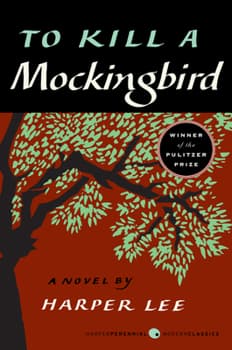
Go Set a Watchman
(Book #2 in the To Kill a Mockingbird Series)
Conditions
A read copy, but remains in excellent condition.
Formats
Conditions
A read copy, but remains in excellent condition.
(Book #2 in the To Kill a Mockingbird Series)
Conditions
A read copy, but remains in excellent condition.
Formats
Conditions
A read copy, but remains in excellent condition.
#1 New York Times Bestseller
"Go Set a Watchman is such an important book, perhaps the most important novel on race to come out of the white South in decades...
-- New York Times (Opinion Pages)
A landmark novel by Harper Lee, set two decades after her beloved Pulitzer Prize-winning masterpiece, To Kill a Mockingbird.
Twenty-six-year-old Jean Louise Finch--"Scout"--returns home to Maycomb, Alabama from New York City to visit her aging father, Atticus. Set against the backdrop of the civil rights tensions and political turmoil that were transforming the South, Jean Louise's homecoming turns bittersweet when she learns disturbing truths about her close-knit family, the town, and the people dearest to her. Memories from her childhood flood back, and her values and assumptions are thrown into doubt. Featuring many of the iconic characters from To Kill a Mockingbird, Go Set a Watchman perfectly captures a young woman, and a world, in painful yet necessary transition out of the illusions of the past--a journey that can only be guided by one's own conscience.
Written in the mid-1950s, Go Set a Watchman imparts a fuller, richer understanding and appreciation of the late Harper Lee. Here is an unforgettable novel of wisdom, humanity, passion, humor, and effortless precision--a profoundly affecting work of art that is both wonderfully evocative of another era and relevant to our own times. It not only confirms the enduring brilliance of To Kill a Mockingbird, but also serves as its essential companion, adding depth, context, and new meaning to an American classic.
The book is a wonderful read, the movie with Gregory Peck is almost exactly like the book.
Let me say something positive, first. The opening chapters that describe Jean Louise' (the adult Scout) journey and returun to her home are beautfully written. Slightly girlishly mawkish, they suggest a writer of the caliber of Flannery O'Conner or Truman Capote in the making. Lee's turns of phrase would be excellent examples for a creative writing syllabus. Now let's talk about the content. The themes that made To Kill a Mockingbird popular are the moral heroism of Atticus Finch's defense of Tom Robinson and Boo Bradley's more mysterious, instinctively heroic defense of Scout. The "leftiist" critique of To Kill a Mockingbird is that while the book has Black characters, only the the White ones are allowed any sense of agency. The Blacks function more as setting and backstory than living characters, which, as the criticism goes, might be discouraging to young readers of color. This is more apparent in Go Set a Watchman, where the pivotal conflict, a fatal auto accident involving Calpurnia's grandson and a White pedestrian, both of whom might have been drunk, and Atticus' impending defense of the young Black man. The imminent courtroom drama never happens and is soon forgotten, however, as the story shifts to the changes in the relationships of Jean Louise (adult Scout) with Atticus, Calpurnia (very superficially), Atticus' brother and sister, and the young man she has been intended to marry. And here is where the story starts to fall apart, which brings us back to To Kill a Mockingbird. Perhaps heroism isn't the main theme. Perhaps it's about the changes and compromises one must make in order to thrive, and lead, a compromised, imperfect society, one that looks and feels placid on the surface but hides turmoil and injustice beneath.
Tedious and sophomoric all the way through. Just stick with "To Kill a Mockingbird." This will only diminish "Mockingbird" if you can get through it...and that's a chore. Awful.
I’ve had this book on my shelf for years, and after finally getting around to it, I’m sad to say it was a grave disappointment. SPOILERS AHEAD: Jean Louise Finch (aka “Scout”), a southern gal who advocates for civil rights for Negros, is labelled a bigot by the other characters mainly because she is utterly shocked that her father, Atticus, is a racist who doesn’t want Negros to progress “too fast” at having the same rights they do. Everyone in Macomb—the racist bigots—is portrayed as having the correct point of view whereas Jean Louise, the civil rights advocate, is (falsely) the one who’s bigoted. Even worse, she’s gaslighted into accepting the antiquated ways of her father and Macomb bigotry. Jean Louise herself is a selfish, obnoxious, and charmless character, but she didn’t deserve this treatment. This novel turns the heroism of “To Kill A Mockingbird” into a feckless piece of writing. The world would largely benefit from this book not being canon to the universe of “To Kill A Mockingbird.”
Harper Lee did not want this book published. Despite her wish, the massive success of TKAM prompted her publishers to put it out anyways. I will not read this book because it was not intended to be read.
Harper Lee once again disappoints with this one. However, I was able to finish this one vs her first one. The story line was drawn out longer than it needed to be and there were too many unnecessary details in the story.

Published by VioletJuly 31, 2019
Published by Bianca SmithJanuary 4, 2018
All you need to make you look smart (not that you’re not already)