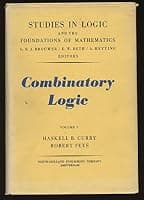
This book is a thoroughly documented and comprehensive account of the constructive theory of the first-order predicate calculus. This is a calculus that is central to modern mathematical logic and important for mathematicians, philosophers, and scientists whose work impinges upon logic. Professor Curry begins by asking a simple question: What is mathematical logic? If we can define logic as "the analysis and criticism of thought" (W. E. Johnson), then mathematical logic is, according to Curry, "a branch of mathematics which has much the same relation to the analysis and criticism of thought as geometry does to the science of space." The first half of the book gives the basic principles and outlines of the field. After a general introduction to the subject, the author discusses formal methods including algorithms and epitheory. A brief treatment of the Markov treatment of algorithms is included here. The elementary facts about lattices and similar algebraic systems are then covered. In the second half of the book Curry investigates the possibility for a formulation that expresses the meaning to be attached to the logical connectives and to develop the properties that follow from the assumptions so motivated. The author covers positive connectives: implication, conjunction, and alternation. He then goes on to negation and quantification, and concludes with modal operations. Extensive use is made in these latter chapters of the work of Gentzen. Lists of exercises are included. Haskell B. Curry, Evan Pugh Research Professor, Emeritus, at Pennsylvania State University, was a member of the Institute for Advanced Study, Princeton; a former Director of the Institute for Foundational Research, the University of Amsterdam; and President of the Association for Symbolic Logic. His book avoids a doctrinaire stance, presenting various interpretations of logical systems, and offers philosophical and reflective as well as mathematical perspectives.
Those interested in mathematical logic will appreciate this book written by one of the main contributors to the field in the twentieth century. The technique of "currying" in higher order logic is named after the author, wherein unary functions can be used to emulate functions with many parameters. The book was first published in 1963, reprinted in 1977, and so is not a up-to-date treatment of mathematical logic, but it could still be used as an historical supplement to a course in this subject. The reader should be aware though the terminology employed by the author is very idiosyncratic and therefore it may not reflect what is currently used in the literature. The first chapter of the book could be considered an introduction to the philosophy of logic and mathematics. The author though views "philosophical logic" as the study of the principles of valid reasoning, and this is to be distinguished from "mathematical logic", wherein mathematical systems are constructed to study (formally) the principles of valid reasoning. One can also according to the author view logic as a theory in itself, and many "models" of it can be studied, in much the same way as many different models of geometry can be considered. The author also discusses very succinctly the logical paradoxes, and the different schools of thought in mathematics, such as Platonism, intuitionism, and formalism. The author clearly advocates the formalist school of thought in this book. In chapter 2, the author gets more into the details of formal reasoning, the field of semiotics is outlined, and the author first begins defining the grammar and symbols for the upcoming discussion. A theory is defined as a class of statements, and consistency and decidability of theories is defined. The idea of a deductive theory is also defined, and the author defines the notion of such a theory being complete. The notions of consistency, decidability, and completeness are the familiar ones now entrenched in current textbooks on mathematical logic. A formal system, according to the author, is a theory in which the parameters of the statements of the theory are introduced as unspecified objects, and the statements of the theory make assertions on the properties of the parameters and their relations. The author considers syntactical systems, wherein the formal objects are taken from some object language, and what he calls Ob systems, which are essentially the systems considered in modern mathematical logic.The author employs the familiar Godel numbering scheme to numerically represent formal objects. The notion of algorithm is brought in here as an effective procedure to manipulate the formal objects of a system. The next chapter is basically an introduction to the analysis of what would now be called the metalanguage of a formal system. This analysis is done in terms of what the author calls epistatements and epitheorems. Examples of these epitheorems include the Godel incompleteness theorem and the Skole