Skip to content
ISBN: 0313205671
ISBN13: 9780313205675

Fires on the Plain.

$68.43List Price: $58.00
ISBN: 0313205671
ISBN13: 9780313205675
Formats

Conditions

A brand-new, unused copy in perfect condition.

Formats

Conditions

A brand-new, unused copy in perfect condition.

See all 8 editionsfrom $6.09

Book Overview

Revised
Format:
Hardcover
Language:
English
ISBN:
0313205671
ISBN13:
9780313205675
Release Date:
November 1978
Publisher:
Bloomsbury Publishing USA
Length:
256 Pages
Weight:
1.13 lbs.
Dimensions:
0.6″ × 6.0″ × 9.0″
FictionLiteraryLiterary CriticismLiterary Criticism & CollectionsLiterature & Fiction

More by Shōhei Ōoka

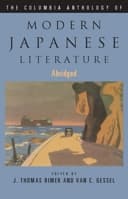
The Columbia Anthology of Modern Japanese Literature: Volume 2: 1945 to the Present
M�a�s�a�o�k�a� �S�h�i�k�i� �, Taiko Hirabayashi, Junzaburo Nishiwaki, Yoshinori Shimizu, Kafū Nagai, Shinobu Origuchi, Ryūnosuke Akutagawa, Mokutaro Kinoshita, Hiromi Itō, Ōgai Mori, Katsue Kitasono, Zenmaro Toki, Tatsuo Hori, Kazue Shinkawa, Takeshi Kaikō, Kazuko Shiraishi, Taruho Inagaki, Fumiko Hayashi, Yoshikichi Furui, Nobuo Ayukawa, Shōhei Ōoka, Kōyō Ozaki, Yuzuru Katagiri, Shin'ichi Hoshi, Haruki Murakami, Masuji Ibuse, Takuboku Ishikawa, Kagai Kodama, Junji Kinoshita, Juro Kara, Mokichi Saito, Shigeharu Nakano, Kenji Miyazawa, Taeko Tomioka, Yōko Tawada, Mieko Kanai, Shuntarō Tanikawa, Shinpei Kusano, Naobumi Ochiai, Yukio Mishima, Nobuo Kojima, Kenji Nakagami, Akiko Yosano, Rin Ishigaki, Tatsuzō Ishikawa, Kōbō Abe, Doppo Kunikida, Yūko Tsushima, Hisashi Inoue, Kenzaburō Ōe, Hagoromo Takeshima, Denji Kuroshima, Hakushū Kitahara, Yasushi Inoue, Edogawa Rampo, Keiichirō Hirano, Hyakken Uchida, Fumiko Enchi, Jun'ichirō Tanizaki, Akiko Baba, Taijun Takeda, Minoru Betsuyaku, Kotaro Takamura, Osamu Dazai, Kanoko Okamoto, Hiroshi Noma, Kunio Kishida, Tsuyoshi Shima, Kyōka Izumi, Tota Kaneko, Naoya Shiga, Hideo Kobayashi, Yoshie Hotta, Shūsaku Endō, Santōka Taneda, Natsume Sōseki, Shōtarō Yasuoka, Machi Tawara, Takako Takahashi, Yasunari Kawabata, Hisajo Sugita, Taeko Kōno, Tōson Shimazaki, Sakutarō Hagiwara, Hakuchō Masamune, Sawako Ariyoshi, Banana Yoshimoto, Yōko Ogawa, Ango Sakaguchi, Hideo Oguma, Minoru Yoshioka, Fumiko Nakajō, J. Thomas Rimer, Van C. Gessel
from: $55.00

Customer Reviews

5 customer ratings | 5 reviews
Write a Review

Haunting and terrifying

This is quite possibly one of the most gripping, devastating novels I've ever read, and certainly one of the most compelling books to come out of World War II from any cultural standpoint. The style of narration (and the psychology of the narrator) will be familiar to those who've read The Stranger (there's even a scene midway through that startlingly evokes Camus' masterpiece), and we not only sense, we LIVE the narrator's increasing despair, degradation, and misery as his situation steadily worsens and he is subjected to increasingly bizarre and grotesque displays of violence. The portrait of a demoralized, defeated army, literally starving and grasping at any potential straws for survival, is possibly startling for American audiences, who may be accustomed to seeing World War II from a different viewpoint altogether. Highly recommended for anyone who enjoys fiction, period.

0

Haunting

Both a soldier and professor of literature in his lifetime, Shohei Ooka weaves in his own experiences as a POW during WWII to present the story of Private Tamura in the unforgettable war story Fires on the Plain. Abandoned by his company on Leyte Island, in the Philippines, as it is losing in a slow, agonizing battle with American forces, Tamura has nowhere to go, nothing to do. As he becomes further and further removed from the "society" of his regiment, his peers, Tamura begins to fall apart. He has come down with consumption and as such is no longer of any use to his platoon, which is facing annihilation. Food is the primary obsession of Japanese commanders - there simply isn't enough. The dying and wounded are therefore sent to the field hospital to be kept until they expire - or are kicked out when their food supply runs out. When Tamura, however, returns from a brief visit to the hospital, his commander slaps him brutally. "You damned fool! D'you mean to say you let them send you back here?" He is thus sent back again; the hospital, however, will not let in patients who don't have their own food. Without food, patients are pronounced "cured" and sent on their way. And thus begins an existential and brutal journey into a heart of darkness. The story focuses on the gradual and permanent removal from society of Private Tamura. Slowly but surely, his ties to society are severed. Tamura, an intelligent and decent man, is thus completely alone in a war zone. He doesn't have a reason to die, so he stumbles about the Philippine countryside in search of food. While searching for sustenance, he must avoid both the local people and American soldiers. During his trials, Tamura carries on an internal dialog on his situation, which reads like a treatise on the existence of God. The imagery is poetic and horrifying, a portrait of a man's descent into hell. Haunting and powerful.

0

De Profundis Clamavi

Abandoned by his company, Private Tamura wanders Leyte Island with neither a reason to live nor a reason to die. Ooka's starving Japanese soldier is absolutely captivating in his determination to analyze the horrors of warfare objectively while he witnesses them first hand. Stumbling through countless forests and mountains, the poetry that seeps from his reasoning is all the more powerful given his completely numbed and desensitized state. There's simultaneous beauty and terror in every one of Tamura's insights all the way through to his confrontations with cannibalism and his struggles to discern between God and himself. My only hope is that on second reading I might better understand some more of the abstract themes Ooka tackles. It's so beautiful...do read it!

0

A treat for all the senses -- beautiful and bizarre.

Ooka Shohei's Fires on the Plain (Nobi) is vividly transcribed and will leave readers with a lasting impression. The author manages to merge stunning literary description with the horrors of war as seen from the point of view of a losing army. The protagonist's slow descent into madness is sublimely rendered -- at once painful to read yet impossible to put down. Like another reviewer posting here, I too read this on a plane and found myself transported 50 years and thousands of miles to the Philippines, amid lush jungles and the fallout of armed conflict. The impact of this novel's stunning end must be experienced to be appreciated. An engaging and educational read that speaks eloquently to our most basic human needs, desires, delusions and taboos.

0

This should be required reading...

I originally picked up "Fires on the Plain" because the story takes place on the island where my grandparents resided and during the time when my father was born. It took a while for me to finally get around to reading it. Unwisely, I chose the plane ride from the Bay Area to Hawaii (so that's about 5 hours) to finally do so...the heavy and heady themes of this amazing novel did not make an easy start to my much-too-short and much-too-irregular vacation. I must have looked silly to my fellow passengers who, during the course of the flight, observed me undergo various emotional planes. In the end, I closed the book, let out an audible sigh, and allowed myself to cry silently. I trust (and hope) that I am not alone in expressing my gratitude to having experienced Mr. Ooka's writing in this manner...I intend to share this with my father; hopefully, we will share a similar love for the sadness in this story.

0