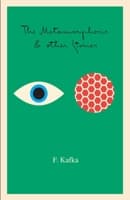
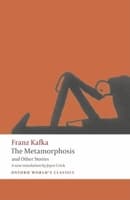
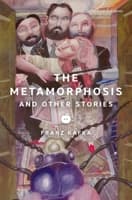
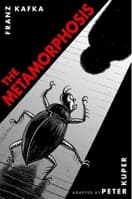
The Metamorphosis
Conditions
A brand-new, unused copy in perfect condition.
Formats
Conditions
A brand-new, unused copy in perfect condition.
Conditions
A brand-new, unused copy in perfect condition.
Formats
Conditions
A brand-new, unused copy in perfect condition.
Gregor Samsa wakes one morning to discover that he has been transformed into a monstrous, insect-like creature. Yet his first thoughts are not about the impossibility of what has happened. He worries about missing the train, disappointing his employer, and failing to provide for his family.
From this unsettling premise, Franz Kafka creates a precise and deeply human story about work, duty, shame, isolation, and the uncertain conditions on which love can depend. Confined to his bedroom and unable to communicate, Gregor remains painfully aware of the life continuing beyond his door. His parents and sister must adapt to his transformation, but their responses gradually reveal the tensions that were already present within the household.
First published in 1915, The Metamorphosis is one of the defining works of modern literature. Kafka combines the impossible with the ordinary in a calm, matter-of-fact style, making Gregor's predicament feel disturbingly familiar. The novella asks what becomes of a person when he can no longer work, speak for himself, or fulfil the role others expect him to perform. It also examines the emotional cost of dependence and the fragile boundary between care and resentment.
Gregor's transformation can be read in many ways: as an image of illness, disability, depression, social exclusion, family obligation, or the dehumanising pressures of modern employment. Kafka offers no single explanation. Instead, he allows the strange event to expose the fears and assumptions beneath everyday life.
Brief, accessible, and rich in meaning, The Metamorphosis continues to speak to readers because its central questions remain unresolved. How much of our identity depends on being recognised by others? Is affection unconditional, or is it tied to usefulness? And what remains of a person when the familiar signs of personhood disappear?
This new translation invites readers to encounter Kafka's haunting novella with fresh attention: not merely as a tale of physical transformation, but as a quiet and penetrating study of human worth.
Franz Kafka was one of the most significant and influential fiction writers of the 20th century. Dark, absurdist, and existential, his stories and novels concern the struggles of troubled individuals to survive in an impersonal, bureaucratic world.
What a beautiful novel, highly recommended it.
Very cheap and in very good quality. This book had an incredibly basic plot, but it’s filled with many underlying messages and themes of abandonment and loneliness. Kafka’s writing style is smooth and easy to read, and overall highly recommended.
Kafkas writing is what I fell in love with more than the stories themselves. His ability to paint a picture whether he is describing a scene or a feeling is what makes me want to come back to this book. Highly recommend!
Fantastic!
The book is very short and straight to the point. Expands on how working everyday doesn't truly make you happy and how all the wealth you've accumulated can be easily taken. Shows how fiance very much impacts people. Good book, really short and easy to read.
Literature throughout history has tried to exemplify the personal identity of human beings, but none has done it so creatively and as hilariously as Franz Kafka's masterful novella, "The Metamorphosis". Kafka has created the most absurd situation; a traveling salesman wakes up one morning to find that he has turned into a giant dung beetle. Yet Kafka uses the absurdity of this premise to exemplify how the unfortunate Gregor Samsa (the man-bug) frees himself from a life of servitude and monotony, to assert his own personal identity through his metamorphosis. Franz Kafka uses brilliant symbolism, hilarious tone, and unique characterizations to exemplify the plight and transformation of this unfortunate salesman and it is through these tools that Kafka creates an absurd experience that any reader can relate to. The use of symbolism throughout this story is what truly allows the reader to understand and appreciate Gregor's push towards independence. Gregor was transformed into a bug, but Kafka uses this transformation as a symbol for Gregor's metamorphosis towards humanity. Before Gregor's transformation, he only lived life to serve others, but through his metamorphosis Gregor slowly comes to meet his own desires, seeking a more personal independence and even coming to appreciate music and art. But most importantly, it is through Gregor's final understanding of love that Kafka truly exemplifies how human the insect truly is. Kafka uses the symbolism of Gregor becoming a bug to represent the tragedy of the life that Gregor was leading, and his metamorphosis symbolizes a more gradual metamorphosis towards an individual humanity. By physically disassociating Gregor from humanity, Kafka perfectly exemplifies how human Gregor has really become. Kafka's use of symbolism is what truly makes the reader's experience relatable to the tale. Although nobody could ever experience what it feels like to wake up as a giant insect, Gregor's struggle for an identity is a trial that is real and relatable to all of us. Kafka represents independence as what truly makes Gregor human, and this same truth exists within all of us. It is through the symbolism of the metamorphosis that Kafka relates this to us, the readers, and he does this brilliantly. The tragedy and emotional connection that Kafka elicits to the reader is of true merit, but the book's success lies in its ability to tie this tragic tale with such a humorous tone. "The Metamorphosis" is an obvious tragedy and it expresses a very serious message. Kafka leaves us no choice but to pity Gregor for the eventual state of his life, but despite all of this, Kafka has written one twisted and hilarious story. The dark, humorous tone that Kafka injects into his words is apparent from the very first sentence, as the story begins with an immediate shock: "One morning, as Gregor Samsa was waking up from anxious dreams, he discovered that in bed he had been changed into a monstrous, verminous bug
Published by Ashly Moore SheldonJuly 6, 2025
As we welcome the month ahead, we're shining a light on notable and acclaimed July-born authors. We're delighted to celebrate them and their beloved works of fiction, nonfiction, poetry, theater, and more.