Skip to content
ISBN: 0140446796
ISBN13: 9780140446791

Dialogues and Letters

$11.79List Price: $17.00
Save $5.21!
ISBN: 0140446796
ISBN13: 9780140446791
Formats

Conditions

A read copy that remains in clean condition.

Formats

Conditions

A read copy that remains in clean condition.

See all 1 editionsfrom $11.19

Book Overview

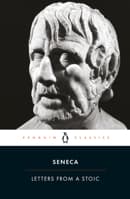
Included in this volume are the dialogues On the Shortness of Life and On Tranquility of Mind, which are eloquent classic statements of Stoic ideals of fortitude and self-reliance. This selection also features extracts from Natural Questions, Seneca's exploration of such phenomena as the cataracts of the Nile and earthquakes, and the Consolation of Helvia, in which he tenderly tries to soothe his mother's pain at their separation.

For more than seventy years, Penguin has been the leading publisher of classic literature in the English-speaking world. With more than 1,700 titles, Penguin Classics represents a global bookshelf of the best works throughout history and across genres and disciplines. Readers trust the series to provide authoritative texts enhanced by introductions and notes by distinguished scholars and contemporary authors, as well as up-to-date translations by award-winning translators.

Format:
Paperback
Language:
English
ISBN:
0140446796
ISBN13:
9780140446791
Release Date:
November 1997
Publisher:
Penguin Publishing Group
Length:
160 Pages
Weight:
0.30 lbs.
Dimensions:
0.4″ × 5.1″ × 7.9″
Age Range:
18 years and up
Grade Range:
Grade 12 and higher
AncientAncient & Classical LiteratureArts & LiteratureAuthorsBiographicalBiographiesBiographies & HistoryBiography & HistoryEducation & ReferenceEssays & CorrespondenceForeign Language Study & ReferenceGreekLetters & CorrespondenceLiterary CriticismLiterary Criticism & CollectionsPhilosophersPhilosophyPolitics & Social SciencesProfessionals & AcademicsRome

More by Seneca

Customer Reviews

2 customer ratings | 2 reviews
Write a Review

"the most reasonable and practical thinker Rome ever knew"

If Seneca was not the greatest philosopher of the Silver Age, then he was the most reasonable and practical thinker Rome ever knew. For his natural, straight-forward system of applied ethics made philosophy a way of living for the whole of the Roman populace. Truly, it was not just the singular privilege of educated wealthy aristocrats and politicians to realize the Stoic ideal, but it was also within the power of uneducated slaves and lower-class-citizens to embody those virtues as well, as the example of Epictetus clearly shows. Now, here presented in this piecemeal selection of Seneca's works, one may first come to meet this exemplar of Stoicism face-to-face in every genre he ever wrote in, with the exception of his Tragedies and his only extant Satire entitled, The God Claudius. Furthermore, these short extractions from Seneca's relatively immense corpus of writings are rich in allusion and anecdote, and they are packed with profoundly helpful advice on how to endure life's hardships and how to enjoys life's benefits to the fullest as well. This little volume will be a great introductory source for Roman Stoicism and it will compel readers to pursue the greater portions of Seneca's superb works. One may discover the complete surviving body of Seneca's writings in text and translation within the invaluable editions of the Loeb Classical Library (Harvard).

0

Great Introduction to Seneca

Great book. This collection by penguin includes a piecemeal assortment of some of Seneca's work. This was my introduction to Seneca so I can't speak to its representation of his work. The essays and letters read in the classic proscriptive style of stoic philosophy (see especially the Meditations of Marcus Aurelius). It was filled with succinct proverbial exhortations that are memorable and penetrating. Seneca and the stoics provide more psychological self-help than most contemporary books in that genre. There is a reason some authors are still read after 2000 years. A quick read and for a worthwhile investment in time--at least for those who are new to Seneca.Some of my favorites:It is better to be despised for simplicity than to suffer agonies from everlasting pretense. Still let us use moderation here: there is a big difference between living simply and living carelessly.We should also make ourselves flexible, so that we do not pin our hopes too much on our set plans and can move over to those things to which chance has brought us without dreading a change in either our purpose or our condition, provided that fickleness, that fault most inimical to tranquility, does not get a hold of us.The greatest obstacle to living is expectancy, which hangs upon tomorrow and losses today.

0