The Flounder
Conditions
A read copy, but remains in excellent condition.
Formats
Conditions
*Best Available: (missing dust jacket)
A read copy, but remains in excellent condition.
Conditions
A read copy, but remains in excellent condition.
Formats
Conditions
*Best Available: (missing dust jacket)
A read copy, but remains in excellent condition.
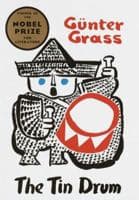
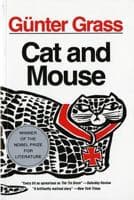
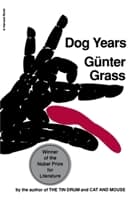
Günter Grass (16 October 1927 – 13 April 2015) was a German novelist, poet, playwright, illustrator, graphic artist, sculptor and recipient of the 1999 Nobel Prize in Literature. Grass was born in the Free City of Danzig (now Gdansk, Poland). In May 1945, after brief service as a teenaged soldier in the Waffen SS, he was taken prisoner by U.S. forces and released in April 1946. Trained as a stonemason and sculptor, he began writing in the 1950s. In his fiction, he frequently returned to the Danzig of his childhood. Grass is best known for his first novel, The Tin Drum (1959), a key text in European magic realism. It was the first book of his Danzig Trilogy, which includes Cat and Mouse and Dog Years. His works are frequently considered to have a left-wing political dimension, and Grass was an active supporter of the Social Democratic Party of Germany (SPD). The Tin Drum was adapted as a film of the same name, which won both the 1979 Palme d'Or and the Academy Award for Best Foreign Language Film. The Swedish Academy awarded him the Nobel Prize in Literature, praising him as a writer "whose frolicsome black fables portray the forgotten face of history". This article uses material from the Wikipedia article "Günter Grass" , which is released under the Creative Commons Attribution-Share-Alike License 3.0 .
Truly an epic journey. The story combines many themes and just as many characters. One must read about half to get a grasp on the reins and after that, it's fun. Cooking and copulation play large roles. All the talk about soup and the endless mushrooms are fantastic. Throughout the text are poems and songs. At first, they don't seem to relate. But one comes to expect them after a time. This is a big change from the style of the Danzig trilogy, much more modern. Grass makes some interesting points about guilt and shame (defecation circles, sleeping with the abbess.) The last few scenes are tremendous. Supposedly, this was Grass' present to himself. The terrific ending must reveal an optimist side to him.
I read this book when it first came out (1980?), and have read, in English or German, 4 other novels by GG. All were wonderful, but this was my favorite. It's "magic realism" that's both thought-provoking and very entertaining, and so well-written and translated. It's really too bad that it's out of print.
An outstanding statment by Grass on history, feminism, cooking and Joycean bodily details which encapsulates the obssession by the Germans of systems, machoness and abstractions that have led to disaster. But the book is a balanced look at the effects of excess feminism as well.