"A wonderfully diverting and stimulating entertainment. Cunningly structured and as satisfying as an intricate piece of clockwork, it plays with narrative, revels in ideas and succeeds in being both fey and sharp, detached and compassionate. At a time when fiction gives all to the tired virtual realities of sex and violence, internets, Agas and middle-class Angst, it is a brilliant reminder of the power of the imagination to surprise, delight and open windows." David Coward in The Times Literary Supplement
"Crumey does produce excellent post-modernist novels, each as concentric and cunning as the others. This is a triptych starting with D'Alembert penning his imagined memoirs. The literary equivalent of an Escher, the story has no identifiable end or beginning. Clever, entertaining, engaging" This description may be from another edition of this product.
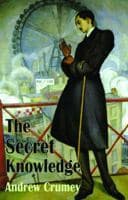
This is Andrew Crumey's third novel, and the second in a loosely related trilogy beginning with Pfitz, and concluding with Mr Mee, a worthy conclusion published in the UK in May 2000.This novel is structured around the structure of Diderot's Encyclopaedia with the focus on Memory, Reason, and Imagination - and while in Pfitz these aspects were dealt with in an abstract way permeating the novel, here there are three distinct parts - each notionally attributed to one of the heads.The most conventional is the first, Memory, a memoir by D'Alembert, with observations by his servants. It deals with D'Alembert's relationship with the other great minds of the time, Diderot and Rousseau, and his troubles in salon culture. The second part is based around a view of the Solar System by Magnus Fergusson. This is an off-kilter way to take various approaches to logic, and philosophy. Each planetary view has a convincing internal logic. Each is completely mad, and very amusing. The final part, Imagination, reintroduces storyteller Pfitz.Each part is laced with Crumey's dry sense of humour, and - as with his other novels - Crumey's mathematical background is put to good use. He has immersed himself in eighteenth century French culture and while in previous novels by Crumey the influence of Calvino, Borges, and Barthelme is most marked here we see some of the philosophical games Diderot uses in Jacques the fatalist and D'Alembert's Dream.While Crumey again demonstrates his erudition, it is necessary to stress that in the midst of the philosophy, and the clever games, Crumey is a witty writer. His novels have a black humour, and occasional farcical scenes running through them. Crumey maintains a very high standard in his fiction, and deserves a broad readership. Those that like Barthelme, Borges, Calvino, or Steve Erickson will find something to like in Crumey.And if you enjoy Crumey and those writers try Drivetime (a novel) or Last Orders (short stories) by James Meek.
0
★★★★☆
Unusual and rewarding
By Thriftbooks.com User, August 27, 1999
People keep comparing Crumey to Calvino and Borges, I can see the similarity but there's a lot else too - like Sterne, Diderot etc, not to mention Flaubert, whose "Three Tales" came to my mind after reading Crumey's "triptych". These are three separate stories linked by a theme ("memory, reason and imagination"). The result is a fine read, though disconcerting if you expect a conventional novel. Paul Auster's "New York Trilogy" also comes to mind. The last story in Crumey's book is related to his earlier novel "Pfitz". I didn't discover this until afterwards but it didn't spoil my enjoyment. Reading "Pfitz" before this book might enhance your understanding, but it's not essential. Crumey's evocation of the 18th century in this book is remarkable. He's a unique and strikingly unusual voice in contemporary fiction.
0
★★★★☆
I love Pfitz
By Thriftbooks.com User, April 29, 1999
I enjoyed this story very much, however it won't make any sense unless you read Pfitz first.