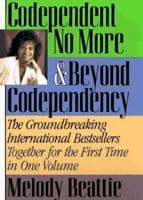
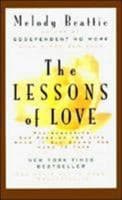
The New York Times bestselling self-help book that offers advice on how to find and choose the recovery program for you, as well as a directory of the wide range of Twelve Step programs, including AA, Codependents Anonymous, Codependents of Sex Addicts, Adult Children of Alcoholics, and more.Millions identified with Melody Beattie in Codependent No More and gained inspiration from her in Beyond Codependency. Now she's back to help you discover how recovery programs work and to help you find the right one for you. Interpreting the famous Alcoholics Anonymous Twelve Steps specifically for codependent issues for the very first time, this groundbreaking book combines Melody's expertise with the experience of other people to: - Explain each step and how you can apply it to your particular issues - Offer specific exercises and activities to use both in group settings and on your own - Provide a directory of the wide range of Twelve Step programs--including Al-Anon, Codependents Anonymous, Codependents of Sex Addicts, Adult Children of Alcoholics, and more The uniquely warm and compassionate voice of Melody Beattie will inspire you to turn your life around--one step at a time. This description may be from another edition of this product.
Melody Beattie (b. 1948 in St. Paul, Minnesota) is the author of Codependent No More (1987), a self-help book aimed at individuals struggling with codependent relationshps. She has written 17 other books self-help books covering codependency and other topics. Her work has been helpful in advancing the concept of addiction to another person.
This was a good book but it wasn’t amazing like her other books. Her book codependent no more is one of my favorites! This one was a little bit of a let down. My favorite parts of this book: I needed to become aware of how much pain I was in. I needed to take care of myself. 7 Many of us have lived with abuse for so long that we do not even identify abuse as such. We call it normal and make excuses for the perpetrator 74 She has is broke down into steps. The chapter labeled step 8 which starts on page 119 was really helpful to me. Especially pages 128-131 Step 9 was also really helpful to me
0
★★★★★
AN ESSENTIAL TOOL!!!
By Thriftbooks.com User, March 24, 2004
This book is an essential tool for anyone wanting to work on their codependency, especially those of us who have worked the 12 Steps before. I related greatly to what Melody Beattie states in the introduction: The 12 Steps of AA helped relieve her obsession to drink and use, but her codependency issues remained until she applied the Steps to her codependency issues. That short sentence explained exactly where I was in my life when I came across this book. Now that I'm not just working the 12 Steps around my alcoholism and addiction, but also working the 12 Steps around codependency, I've been given a new freedom that I never knew was possible. Now, I'm not just a grateful alcoholic, I'm a grateful codependent!
6
★★★★★
The 12 Steps of A.A. adapted for recovery from codependency
By Thriftbooks.com User, September 29, 2002
Melody Beattie is the author of CODEPENDENT NO MORE, the book that sold millions of copies the world over and made the word "codependent" a household word. Melody defines codependency as a state where you believe your happiness comes from a specific person, and then you become obsessed with controlling that other person. Very often, but not always, codependents find themselves in relationships with alcoholics, drug addicts, or people with other kinds of self-destructive compulsive habits and addictions. Inevitably, the codependent will become obsessed with trying to get their addicted spouse or "special person" off of that substance. The problem with this, however, is that the codependent does not see that they *themselves* have a problem for being constantly attracted to people who do not want to be helped; also, the codependent often *needs* to be needed and derives their self-esteem from being needed, which would explain the attraction to addicts (never mind the fact that addicts usually give up their addictions only when they themselves want to). So, since codependents often find themselves involved with addicts, it is rather fitting that Melody Beattie has adapted the 12 Steps of Alcoholics Anonymous for aid in recovery from codependency and has written CODEPENDENTS' GUIDE TO THE 12 STEPS. Many of the steps of recovery from codependency are very similar to recovery from any addiction, including alcoholism, so not much has had to be altered in this adaptation. To my recollection, only the wording of the "first step" has been slightly changed, wherein the codependent does not admit to powerlessness over alcohol, but rather powerlessness over other people. Melody highlights each Step with examples and stories from her own experience as a counselor, and her way of telling stories is always very succinct, sincere, and non-condemnatory. Another helplful thing is that this book contains an index of many books and guides that are helpful for the person in recovery, including addresses to the different 12 Step organizations.
4
★★★★★
One of Melody Beattie's best
By Thriftbooks.com User, January 24, 2000
This book has been invaluable to me as a comforting and challenging resource, especially as I worked through a recent, highly painful relationship loss. I began to understand the 12 Steps much more clearly through Melody Beattie's clear and gentle explanations. Many people I know in 12-step programs use this book, finding that it resonates well with many different types of recovery work.
2
★★★★★
Easy to understand intro to changing your life in recovery!
By Thriftbooks.com User, November 4, 1997
A small group of us used this book in working the 12 steps our some our basic co-dependency issues. This eased some of us 'newcomers' into the 12 step process in a nurturing manner. I could really relate and appreciate the stories and examples that Melody Beattie shares to relates the issues to so that I could comprehend. This book allowed some deep rooted issues to be explored and my process of recovery to flourish.