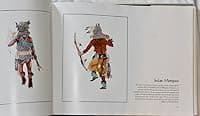
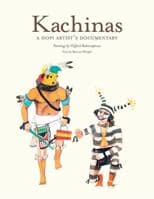
What would our world be like without clowns? Let's hope we'll never have to experience such a time. The subtitle of this book describes the dual role of clowns in Hopi life and religion. Clowns are (both): "tradition keepers and delight makers". To the Hopi, clowns are more than just circus entertainers. To be sure, they function as slap-stick merry makers to the delight of the gathered crowds, but they are much more. From the Koshare (Tewa clown) to the Koyemsi (Mudhead) to the Kwikwilyaka (Mocking katsina) and the dozens of other clowns described by the author, the Hopi clowns serve as teachers who share valuable lessons about both the good and bad in mankind. Their role, as "tradition keepers" is critical to the Hopi way of life. Barton Wright does an excellent job of sharing the background and purpose of a wide variety of clowns. At one point Mr Wright describes them as the "caretakers" or "fathers" of the people and other kachinas. Such insight is critical to one's understanding of the Hopi, their customs and their dances. This is an excellent resource for anyone interested in Hopi legend and history or for the collector of Hopi art. The photographs and sketches contained in this 2004 publication were lacking in both quality and detail. The sketches are primative and most photos contain examples from the 1970's rather than the highly detailed carvings of 1990 and beyond. With this in mind, my rating dropped from "5" to a "4". Overall, the book is one which I would recommend for any Hopi library.