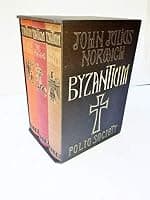
The Byzantine Empire lasted for 1123 years, a period longer than that which separates us from William the Conqueror. The third and final volume of the author's history of Byzantium, this book tells of the dire consequences of the defeat of the Seljuk Turks at the battle of Manzikert in 1071; of the Fourth Crusade, whose Crusaders, led by the octogenarian Doge of Venice, turned their attention away from the holy places to hurl themselves against Constantinople, sacking the city and setting up a succession of Frankish thugs on the imperial throne; and of the 200-year struggle by the restored Empire against the inexorable advance of the Ottoman Turks. This account of the city's fall, the last great epic in the history of the Middle Ages, is the climax of the story. The Byzantines, under their last Emperor, Constantine XI, heroically held out against the immense army of the Sultan Mehmet II for 55 days until, in 1453, the massive walls of Constantinople crumbled at last. This description may be from another edition of this product.
Closure to a story of intrigue and fascinating history
By Thriftbooks.com User, May 27, 2005
If you have seen my other reviews on the previous two volumes, you will note that my criticism on the lack of maps is not a new one. However, once I get past that aspect of the book, wow...what a page turner. One of the reviewers here wrote "Gotterdamerung"...absolutely appropriate. The decline of one of the longest lasting empires is tragic in that the major Byzantine players had, at times,opportunities to reverse the decline, but Byzantine intrigue ruled the day. Particularly today with the movies highlighting the crusades, this volume sheds another light on the Byzantine view of the crusaders, a view which many westerners may be unaware of. The almost anti-climatic fall of Constantinople is a sad footnote in history, but the manner in which Norwich describes it is such a pleasurable read, I would not hesitate to pick this volume up again and reread it some time in the future. A wonderful story.
2
★★★★★
The not-so-triumphant triumphant conclusion
By Thriftbooks.com User, August 13, 2002
The final volume of Norwich's Byzantine history is a literary trimph, despite the disintegrating nature of the civilization being written about. In this volume Norwich begins in the aftermath of the battle of Manzikert in 1071 and finishes with the conquest of Constantinople by the Ottomans in 1453. Norwich uses his elegant prose style to present this tragic story in a highly moving way. All three volumes read like a eulogy at the funeral of beloved relative. In this period of dehumanizing social sciences Norwich brings the people of the past alive, and treats them with respect and dignity even when their behavior does not necessarily inspire kind treatment. The role and majesty of Byzantium has been overlooked in the West for centuries; in doing his best to rectify that Norwich has created one of the masterpieces of historical writing.
1
★★★★★
Worth buying for the footnotes alone!
By Thriftbooks.com User, February 16, 2000
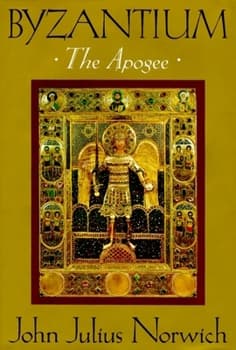
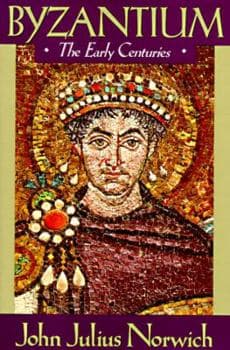
Others have written at length about the scholarship and erudition. The Byzantium trilogy is indeed an excellent addition to my history bookshelf. If you need any encouragement to buy it, then just read a couple of the footnotes: "neither the imperial army nor Alexius Comnenus [the Emperor] emerges with much credit from the bloodbath of Levunium." footnote: "Anna Comnena (in The Alexiad, a history) exonerates her father from any involvement in the massacre, but then she would, wouldn't she?" Or regarding the Emperors before Alexius Comnenus: "...Inflation, which had already begun under Michael VII, (footnote here), spiraled more dizzily than ever." Footnote; "He was popularly known as 'Parapinaces', or 'Minus-a-quarter', since the gold nomisma, after having remained stable for more than 500 years, was said to have lost a quarter of its value during his reign." On an imperial marriage, the footnote reads: "The marriage evoked 100 lines of peculiarly flatulent verse from Claudian, the Epithalamium ending with an affecting picture of an infant son sitting on his parents' knees. Maria is said, however, to have lived and died a virgin." I recommend this book, and the other two books (Byzantium: The Early Centuries, and Byzantium: The Apogee) highly. Read them. You won't be disappointed. I draw a parallel between the books and what Lord Norwich said about the Byzantine Emperors: "Some of these Emperors were heroes, others were monsters; but they were never, never dull."
1
★★★★★
Strong writing from a master of the craft
By Thriftbooks.com User, August 21, 1998
Too often history books are written solely for academics, leaving the layperson struggling in a morass of uninteresting facts, punctuated by poor writing. Norwich is an exception to this. Academically, his books are sound. He is one of the pre-eminent Byzantine scholars of today. Yet, his work is also readable, interesting and dare I say enjoyable. If you're a fan of history, or are simply looking for something different to read, any one of these three books (Early Centuries, Apogee or Decline & Fall) are well worth the effort.