


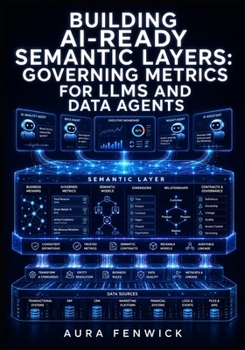
Building Ai-Ready Semantic Layers: GOVERNING METRICS FOR LLMS AND DATA AGENTS: Implement dbt MetricFlow, Cube Cloud, and Snowflake Semantic Views for

Build a semantic layer that gives BI tools, LLMs, and data agents the same governed business meaning.
Giving an AI model access to a warehouse does not guarantee analytically correct answers. Valid SQL can still use the wrong metric, join at the wrong grain, duplicate revenue, misinterpret time, expose restricted data, or produce a different answer from the company dashboard.
This practical guide shows how to move stable business logic out of prompts and ad hoc queries and into governed semantic models. You will learn how to design metrics that remain consistent across traditional analytics and AI systems, then implement and operate them with dbt MetricFlow, Cube Cloud, and Snowflake Semantic Views.
Model grain, entities, primary keys, joins, facts, dimensions, measures, and semantic contracts correctlyPrevent fanout, chasm traps, duplicate aggregation, unsafe distinct counts, and ratio errorsBuild simple, ratio, derived, cumulative, and conversion metrics with governed time semanticsImplement semantic models with MetricFlow, Cube Cloud, and Snowflake Semantic ViewsPrepare metrics for LLMs with descriptions, synonyms, AI context, verified queries, literal resolution, and domain routingConnect semantic services to applications and agents through SQL, REST, GraphQL, SDKs, and MCPDesign governed MCP tools for metric discovery and semantic querying instead of unrestricted raw SQLCombine structured analytics with document retrieval, search, and multi-step agent reasoningProtect AI analytics with RBAC, row security, masking, tenant isolation, identity propagation, and least privilegeDefend against prompt injection, tool misuse, semantic model poisoning, data exfiltration, and unsafe write actionsTest metric behavior with semantic unit tests, paraphrase evaluations, regression suites, and cross-engine contract testsControl caching, pre-aggregations, materializations, query fanout, latency, concurrency, and agent costGovern metric ownership, certification, versioning, deprecation, drift detection, and multi-platform synchronizationThe guide includes extensive SQL, YAML, Python, Shell, JSON, and GraphQL examples that connect semantic concepts to realistic implementation, testing, security, agent integration, and production operations.
You will also learn how to build a production semantic trust chain so that transformations, metric definitions, execution engines, access policies, BI tools, and AI agents stay aligned around the same approved business definitions.
Grab your copy today and build analytics systems where AI flexibility works on top of governed, testable, and consistent business semantics.
Customer Reviews
ThriftBooks ® and the ThriftBooks ® logo are registered trademarks of Thrift Books Global, LLC
