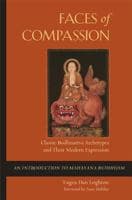
Contemporary Westerners look for spiritual guides to help them find the way to a more wholesome, productive lifestyle, and this fascinating book offers an introduction to a particular kind of guide, the Bodhisattva figures of the Buddhist tradition.
Explaining the psychology of bodhisattva practice, imagery, and imagination, Bodhisattva Archetypes identifies a number of archetypal figures -- beings dedicated to the universal awakening or enlightenment of everyone. In language that is subjective and reflective -- with fascinating folklore of the Bodhisattva tradition and numerous illustrations of the icons and their sacred sites -- Taigen Daniel Leighton introduces readers to recognizable Bodhisattva archetypes, like Maitreya the future Buddha (often depicted as a fat, laughing Chinese figure) as well as contemporary figures who exemplify Bodhisattva ideals, such as Martin Luther King, Jr., Mahatma Gandhi and Henry David Thoreau. These familiar personages from non-Buddhist spiritual traditions reinforce Leighton's view that the search for spiritual well-being is global, and that, in today's world, the bodhisattva ideal is a relevant, useful guide. This description may be from another edition of this product.
When I initially started reading this book, I felt it had potential. Simply by describing the archetypes, it reminds us of the principles of an ethical life - that we all seem to completely forget in daily life. I had some problems though, with the author's forays into explaining issues of race, class and discrimination. At many places, where one least expects it, he stigmatizes people who address the wrongness of discrimination and oppression and seems to think that they should just lighten up and swallow injustice. I think perhaps in the next edition, if the author wishes to condemn violence, he should select as a case study institutional violence - rather than talking about the ways in which its victims have tried to create a more just society.
0
★★★★☆
Thought-proking and educational
By Thriftbooks.com User, October 1, 2000
A wonderful introduction to bodhisattva practice and history. Rev. Leighton explores the historical manifestations of the bodhisattvas, but always returns to examples accessable to the western reader (this western reader, anyhow!) and brings the focus to the ways we can learn from the bodhisattvas, not just revere them from afar.
0
★★★★★
Lucid and Engaging
By Thriftbooks.com User, January 6, 2000
In this book, Taigen Leighton achieves something that I have rarely found (but am always searching for) in popular Buddhist literature: he matches objective scholarship and illuminating historical, sociological, and psychological observations with religious depth, insight, and sensitivity. In fact, his chapter on Avalokiteshvara and his discussion of Pure Land Buddhist traditions played a determinative role in my own spiritual unfolding. And like the skillful orator Manjushri's, Taigen Leighton own language is clarifying and incantatory at once. To enter into its serene rhythms is to taste something of the presence of the Bodhisattvas. A highly edifying read and radically Mahayana work that is precisely what is needed to lead us into the new millennium.
0
★★★★★
Inspiring and Informative
By Thriftbooks.com User, March 13, 1999
This well written book is inspiring and informative. It is a sourcebook of information about Buddhist iconography, literature and psychology and, at the same time, it makes the seemingly arcane idea of the "boddhisattva" compellingly relevant to our struggle to lead conscious and responsible lives in these complex and morally murky times. Mr. Leighton has served us and the Dharma well with this important addition to the epochal effort to bring the essence of Buddhism to the West.