Skip to content
ISBN: 1568364172
ISBN13: 9781568364179

Black Rain

$6.99List Price: $12.00
Save $5.01!
ISBN: 1568364172
ISBN13: 9781568364179
Formats

Conditions

An apparently unread copy in perfect condition.

Formats

Conditions

An apparently unread copy in perfect condition.

See all 15 editionsfrom $5.59

Book Overview

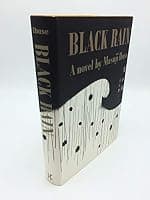
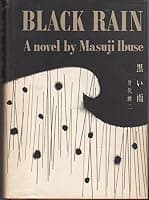
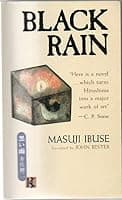
Black Rain is centered around the story of a young woman who was caught in the radioactive "black rain" that fell after the bombing of Hiroshima. lbuse bases his tale on real-life diaries and interviews with victims of the holocaust; the result is a book that is free from sentimentality yet manages to reveal the magnitude of the human suffering caused by the atom bomb. The life of Yasuko, on whom the black rain fell, is changed forever by periodic bouts of radiation sickness and the suspicion that her future children, too, may be affected.

lbuse tempers the horror of his subject with the gentle humor for which he is famous. His sensitivity to the complex web of emotions in a traditional community torn asunder by this historical event has made Black Rain one of the most acclaimed treatments of the Hiroshima story.

Format:
Paperback
Language:
English
ISBN:
1568364172
ISBN13:
9781568364179
Release Date:
August 2012
Publisher:
Kodansha International
Length:
304 Pages
Weight:
0.60 lbs.
Dimensions:
0.9″ × 4.4″ × 7.1″
ContemporaryFictionGenre FictionHistoricalLiterature & Fiction

More by Masuji Ibuse

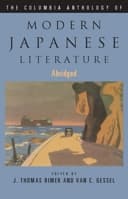
The Columbia Anthology of Modern Japanese Literature: Volume 2: 1945 to the Present
M�a�s�a�o�k�a� �S�h�i�k�i� �, Taiko Hirabayashi, Junzaburo Nishiwaki, Yoshinori Shimizu, Kafū Nagai, Shinobu Origuchi, Ryūnosuke Akutagawa, Mokutaro Kinoshita, Hiromi Itō, Ōgai Mori, Katsue Kitasono, Zenmaro Toki, Tatsuo Hori, Kazue Shinkawa, Takeshi Kaikō, Kazuko Shiraishi, Taruho Inagaki, Fumiko Hayashi, Yoshikichi Furui, Nobuo Ayukawa, Shōhei Ōoka, Kōyō Ozaki, Yuzuru Katagiri, Shin'ichi Hoshi, Haruki Murakami, Masuji Ibuse, Takuboku Ishikawa, Kagai Kodama, Junji Kinoshita, Juro Kara, Mokichi Saito, Shigeharu Nakano, Kenji Miyazawa, Taeko Tomioka, Yōko Tawada, Mieko Kanai, Shuntarō Tanikawa, Shinpei Kusano, Naobumi Ochiai, Yukio Mishima, Nobuo Kojima, Kenji Nakagami, Akiko Yosano, Rin Ishigaki, Tatsuzō Ishikawa, Kōbō Abe, Doppo Kunikida, Yūko Tsushima, Hisashi Inoue, Kenzaburō Ōe, Hagoromo Takeshima, Denji Kuroshima, Hakushū Kitahara, Yasushi Inoue, Edogawa Rampo, Keiichirō Hirano, Hyakken Uchida, Fumiko Enchi, Jun'ichirō Tanizaki, Akiko Baba, Taijun Takeda, Minoru Betsuyaku, Kotaro Takamura, Osamu Dazai, Kanoko Okamoto, Hiroshi Noma, Kunio Kishida, Tsuyoshi Shima, Kyōka Izumi, Tota Kaneko, Naoya Shiga, Hideo Kobayashi, Yoshie Hotta, Shūsaku Endō, Santōka Taneda, Natsume Sōseki, Shōtarō Yasuoka, Machi Tawara, Takako Takahashi, Yasunari Kawabata, Hisajo Sugita, Taeko Kōno, Tōson Shimazaki, Sakutarō Hagiwara, Hakuchō Masamune, Sawako Ariyoshi, Banana Yoshimoto, Yōko Ogawa, Ango Sakaguchi, Hideo Oguma, Minoru Yoshioka, Fumiko Nakajō, J. Thomas Rimer, Van C. Gessel
from: $55.00

Customer Reviews

12 customer ratings | 5 reviews
Write a Review

Relentless

Masuji Ibuse's "Black Rain" is rightly considered a classic in Japanese literature, and perhaps "the" classic of literature about the atomic bombs dropped on Japan. Shigematsu and his wife, Shigeko, arranged for a relative, Yasuko, to move to Hiroshima in order to avoid the draft for the war effort. Shigematsu worked for the government and could arrange things. After the bombing, persistent rumours about Yasuko suffering from radiation sickness made it impossible to find her a suitor for marriage. This problem prompted Shigematsu to write his own account of August the 6th, 1945, to show that Yasuko was exceptionally healthy. His logic was that he had been exposed to much more and his own life was relatively normal. He is a man of pride and dignity, as well as one with a keen sense of his own obligations to others around him. Shigematsu's account is a catalogue of a plethora of horrors that people suffered during and immediately after the bombing. The injuries, the sights and Shigematsu's descriptions of them left this reader feeling less than pleasant. Shigematsu does not hold back on the details, nor does he attempt to overwell the reader with cheap shock tactics. Shigematsu neither asks for nor expects the reader's sympathy. It is almost as if the bomb has to fit within his life and everyday routine. In the midst of the horror, for example, Shigematsu has business to attend to, and sees that he has done it to the extent possible. He comes across as a forthright and straight up person with a deep sense of trying to maintain some air of normality in the midst of terrible circumstances. Ibuse based his novel on accounts written by survivors who were there and saw what happened. Ibuse neither justifies the bombing nor blames anyone for it, but focuses on the tragedy itself from a very human viewpoint. His relentless journey through the aftermath of the bomb is indeed a statement for life and dignity. Shigematsu and those around him somehow maintain a deep sense of value and dignity for human life and experience, which especially shine through in the days after the bombing itself. This is not a pleasant book to read, but it is a great book and should be counted with the greats of literature from around the world. This book is a touching and penetrating journey into a Japanese family's experiences of the Hiroshima bombing. I absolutely recommend it to all.

0

An Interesting Perspective.

I was a missionary for the Church of Jesus Christ of Latter-day Saints in Japan for two years, and was able to visit Hiroshima several times. I visited the Peace Park memorial there, and toured the museum. It was, to say the least, a very sobering experience.Reading this book was also sobering, but I gained an interesting perspective from doing so. The great thing about this book is that it shows the bombing from the perspective of regular Japanese people and how it affected them. They didn't really know what had happened when the bomb went off. People didn't know about atomic bombs back then the way we know now.The book also affords a very neutral perspective on the bombing. It isn't necessarily either anti-american or pro-japanese. It just tells the story as it happened. I highly recommend it for anyone who wants to know more about what happened to people in Hiroshima and how it affected their lives.

0

Kuroi Ame

I was shocked to see that only five people have reviewed this book before me. It is such an important book in showing the tragedy caused by the Atomic bomb. The book begins by describing the peaceful life of Shigematsu a man who worked for a clothing company during WW II. At first the reader learns that Shigematsu is trying to beat radiation sickness by taking it easy and raising fish. Howerer, his idealic life is disturbed because no man is willing to marry Yasuko, his adopted daughter, because they are worried that she suffers from radiation poisoning. To help prove that she is okay. He writes out his full account of the time of the bombing. This book is mesmerizing. It shpws it graphic detail the ddestruction of the bomb. It is not blaming anyone, it is just showing the facts

3

Terrifying and true

Black rain describes the horrors of the bombing of Hiroshima and its after effects through the life of a family's experience. Based on real accounts, the historical novel provides important educational insights to its readers. The terrors described stay true to what actually happened and gives the reader essential insights needed to understand what happened in Hiroshima and to ask if it was really necessary. It does this however, with glimpses in to a more relaxed Japanese life after the war, which provides welcome breaks from the story. This book is a great step in coming to an understanding of the bombing of Hiroshima.

1

Moving; by turns beautiful and horrific

This is one of the most heart-wrenching accounts of the bombing of Hiroshima I have ever read. Ibuse's matter-of- fact telling of the effect of the bombing on a single family leaves the indictment entirely up to the reader; the human level of the story is more effective than a thousand history books.

0