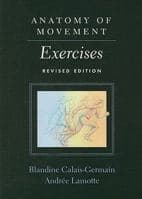
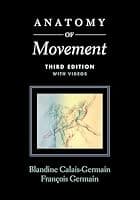
Anatomy of Movement presents a dynamic, integrated approach to the study of the physical structures of the musculoskeletal system and their functional relationship to the movements of the human body. In clear and concise text illustrated with more than a thousand graphic drawings, the author guides the reader on a lively tour of the muscles, bones, ligaments and joints of the arms, legs and trunk. The focus throughout the book is on anatomy not for its own sake, but in its functional relationship to the actual movements of the body in dance, exercise, and other physical disciplines. In this newly-revised edition, a majority of the thousand-plus illustrations are new or have been modified by the author from the original edition. The text has also been updated, and the sequencing of the presentation of the musculoskeletal anatomy has been revised in part. This description may be from another edition of this product.
As other reviewers have said, this is an excellent introduction to anatomy and kinesiology. The book strikes the perfect balance between clinical detail and practical knowledge for body-workers, athletes and dancers. We have copies of several pages up on the wall at my Pilates studio which get referred to often.All the major skeletal muscle groups of the limbs and torso are covered. It is not a disection manual. It is organized for students of movement. Of particular value is the section on the work of the psoas and the "psoas paradox" that is somewhat controversial. To get more in depth, one text I can recommend for the dancer/Pilates instructor is "Dance Kinesiology" by Sally Sevey Fitt.
7
★★★★★
wonderful book
By Thriftbooks.com User, January 19, 2002
This book is everything I wanted. I faced facts a long time ago that when it comes to subjects like science and anatomy, I'm not incredibly gifted. But I understood everything in this book during the first read. It is all laid out so matter-of-factly, that it is easy to digest.As a yoga instructor, I have been looking for a book that covers how the human body moves in a way that I could apply towards my knowledge of postures. This book succeeded admirably.
8
★★★★★
Easy to understand and very helpful
By Thriftbooks.com User, March 14, 2000
As a student of yoga and dance, I've been looking for an anatomy book to help me understand what's involved in movement. Unfortunately, most of the books I found were encyclopedic reference tomes that overwhelmed me with information. So I was delighted to run across this one: because its specific focus is movement, the drawings and descriptions cover only the relevant anatomical details. It's easy to understand and clear without being simplistic. The organization of the book makes it easy to find the information you want. And it doesn't just show joints and muscles; other relevant body parts are illustrated so the reader comprehends how everything works together (I never understood what the diaphragm really looks like until I saw this book!). This is a book that belongs in everyone's library -- it's not just for dancers or bodyworkers.
5
★★★★★
The finest introduction to muscle & joint biomechanics
By Thriftbooks.com User, December 28, 1999
This excellent book focuses on the practical explanation of joint construction and function. Describes in easy-to-understand terms how muscles act upon joints. Uncanny in its ability to simplify a complex subject, if studied carefully it will give there reader an understanding of applied anatomy and kinesiology to almost second year university level. Excellent-yet-simple illustrations can be related to Dance, Gymnastics, Yoga and Martial Arts. I have used it extensively throughout my degree and in my opinion it should be a standard text in all human movement and physiotherapy courses.
8
★★★★★
The best anatomy of skeletal musculature I have found.
By Thriftbooks.com User, September 29, 1999
The book contains hundreds of drawings showing the attachments and actions of the skeletal muscles. Muscle actions are related to movements of stretching, walking, standing, dance, sport, etc. Diagrams show the range of movement, how muscle action varies with posture and position, directions in which force is exerted, how the action of one muscle affects another.