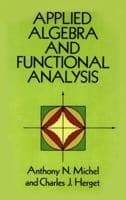
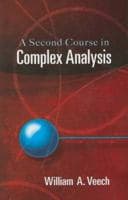
This is a great book for getting started with approximation theory. All you really need to do this book is a decent background in calculus and linear algebra: all the functional analysis and other tools you need are provided in the book. The only drawback to the book is that it's out-of-date and no longer reflects current research, but it does a great job in covering all the basics you'll need to understand the new, advanced stuff when you go looking for it in other books and journals. Still, this book is indispensable and I would recommend it over every other book I've seen in the field if you're new to approximation theory.
0
★★★★☆
Great book ...
By Thriftbooks.com User, September 17, 2002
The book is terrific ... I just want to know what a "dress reversal" is - as mentioned by a previous reviewer. Maybe I missed something!!
0
★★★★★
Not a good FIRST book on approximation theory
By Thriftbooks.com User, April 27, 2001
This is a good introduction to approximation theory, but not a good first book on approximation theory. The standard topics are covered: uniform approximation, least squares approximation, polynomial and spline interpolation, and approximation and interpolation by rational functions. Each of these topics deals with real valued functions of a real variable.This book suits someone who has a good basic understanding of functional analysis: compact sets, uniform continuity, basic operator theory. Having said that, this book is actually quite good because instead of just listing the standard results accompanied with the tightest proofs, the author usually take a motivating approach to each of the results. He often starts out with a certain line of reasoning, demonstrates the resulting complications, and then picks up another line of reasoning that makes the result more apparent. This is very instructive because it gives you an insight to the "dress reversal" instead of just the "performance".