


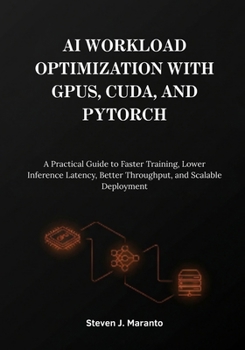
AI Workload Optimization with GPUs, CUDA, and PyTorch: A Practical Guide to Faster Training, Lower Inference Latency, Better Throughput, and Scalable

Your AI model may work-but is it fast enough, efficient enough, and stable enough to survive real training and production use?
Slow training jobs, idle GPUs, memory crashes, weak throughput, high inference latency, and expensive cloud runs can turn a promising AI project into a costly engineering problem. Adding more hardware is not always the answer. If you do not know where the bottleneck is, you may waste time tuning the wrong part of the system.
AI Workload Optimization with GPUs, CUDA, and PyTorch gives you a practical, measurement-first workflow for improving AI performance without guesswork. Built around the baseline, profile, optimize, verify method, this book helps you identify what is slowing down your workload, apply the right optimization, and confirm the result with clear metrics.
Inside, you will learn how to:
Benchmark training and inference correctlyProfile PyTorch workloads before changing codeImprove GPU utilization, memory use, and data loadingApply mixed precision, torch.compile, and CUDA-aware optimization carefullyScale training across multiple GPUsOptimize inference with PyTorch, ONNX Runtime, TensorRT, Triton, and vLLMMeasure latency, throughput, tail latency, tokens per second, and costThis book is written for machine learning engineers, software engineers, data scientists, AI infrastructure builders, and students who want practical GPU performance skills. The examples are self-contained, with code, commands, scripts, and project materials included directly in the book-no external companion repository required.
Customer Reviews
ThriftBooks ® and the ThriftBooks ® logo are registered trademarks of Thrift Books Global, LLC
