A Russian Journal
Conditions
A brand-new, unused copy in perfect condition.
Formats
Conditions
A brand-new, unused copy in perfect condition.
Conditions
A brand-new, unused copy in perfect condition.
Formats
Conditions
A brand-new, unused copy in perfect condition.
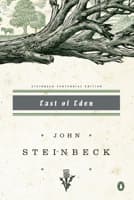
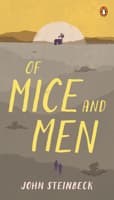
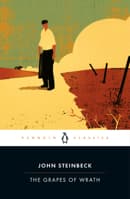
John Steinbeck, Jr. (born February 27, 1902 - December 20, 1968) was an American writer best known for the novel Grapes of Wrath, for which he won a Pullitzer Prize, and the novella Of Mice and Men. He wrote 27 books in total, including six non-fiction books, and received the Nobel Prize for Literature in 1962. Despite his literary success, Steinbeck remains a controversial author, due to anti-captialist themes in Of Mice and Men and Grapes of Wrath, and his books have been banned from various schools and libraries since their publication. Other notable Steinbeck works include East of Eden (1952), Travels with Charley (1960), and In Dubious Battle (1936).
I think this book is wonderful and very very interesting. I like the style of Steinbeck and I have enjoyed all his books that I have read. This book shows the life in the Soviet Union (they visit Moscow, Ukraine and Georgia) shortly after the war, when people are trying to rebuild their lives after the war. I`d say that mainly they are pretty enthusiastic about that and believe in the better future to be achieved by the hard work... In the time of edgy relations between Soviet Union and USA, this book shows that the russians and the americans both are people just like others...
I'm a photographer and huge admirer of both Capa and Steinbeck, but I wasn't sure what to expect with this book. In fact, it's totally readable, wonderfully informal and very engaging -- something of a page turner. You get a vivid picture of the strength and dignity of the Russian people after the terrible destruction of the war, and also an entertaining sense of the relationship between Capa & Steinbeck and their Russian hosts. Their trip took place in 1948, just as the cold war began, and it offers unique insight into how the people of Russia see the USA -- namely as an important and admired friend. Unfortunately, the pictures, while fascinating, are not well served by the paperback printing. But given the paper quality and the small size of the book, they're about as good as they can be. I suspect that a hardcover would do the pictures more justice.
This is a great road trip story . . . that just happens to be set in Russia (and elsewhere in the Soviet Union). It is an amusing and thoughtful account of Steinbeck's travels with his good friend Robert Capa. As Steinbeck often noted in his works of nonfiction, he recounts merely what he saw, which may or may not be reflective of the experiences of others. Thus this is far more a narrative about two men traveling together than it is a book about Russia. Steinbeck does not seek to unravel the mysteries of Russia; he merely wishes to take a peek behind the curtain to get a glimpse of how its inhabitants live.This is a very amusing, thoughtful and readable book - the best Steinbeck I've read.
This wonderfully written book takes you through post-war Soviet Union, to farms and cities devastated by war but struggling to return to normalcy. Robert Capa not only adds wonderful photos but his role in this story is both funny and illuminating for any Capa fans. Written in the late 1940s, the story provides us with a very human side of the Russian people. The openness and friendliness of everyone they meet contrasts with the paranoia and hatred so present in the US at that time.I read this as both a photographer and one who was recently in Russia and the insight provided was very enjoyable and educating. Capa's mannerisms and method of photography allowed his subjects to open up and feel comfortable in his lens -- not an easy thing since so many of the people had lost family and suffered terribly. Steinbeck's writing is honest, funny and his skills as a non-partisan reporter really shine in this work.
Three years after the end of the War, John Steinbeck and photographer Robert Capa made a sweeping journey through the USSR. The countryside and cities were still ravaged by the war, transportation difficult over devastated roads and rails. Shattered tanks and warplanes still littered the landscape. Every family had been touched by the conflict and their everyday life recorded in this memoir was adversely affected by the years of occupation and struggle. But the resilient Soviet people were rebuilding, and in the midst of hardship they welcomed the Western journalists into their homes and lives. This is not a book about political ideology. Steinbeck's elegant writing and Capa's brilliant photography capture the spirit of a people working heroically to restore their homeland but still taking a little time out to have fun. For anyone interested in the human dimension of the War on the Eastern Front, "A Russian Journal" will give an unforgetable impression of its recent aftermath.