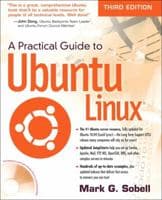
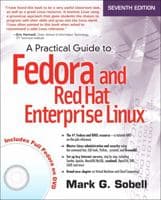
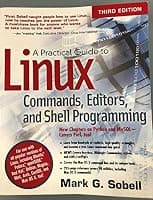
The Most Useful Tutorial and Reference, with Hundreds of High-Quality Examples for Every Popular Linux Distribution"First Sobell taught people how to use Linux . . . now he teaches you the power of Linux. A must-have book for anyone who wants to take Linux to the next level." -Jon "maddog" Hall, Executive Director, Linux International Discover the Power of Linux--Covers macOS, too
Learn from hundreds of realistic, high-quality examples, and become a true command-line guru
Covers MariaDB, DNF, and Python 3
300+ page reference section covers 102 utilities, including macOS commands
For use with all popular versions of Linux, including Ubuntu, (TM) Fedora, (TM) openSUSE, (TM) Red Hat, (R) Debian, Mageia, Mint, Arch, CentOS, and macOS Linux is today's dominant Internet server platform. System administrators and Web developers need deep Linux fluency, including expert knowledge of shells and the command line. This is the only guide with everything you need to achieve that level of Linux mastery. Renowned Linux expert Mark Sobell has brought together comprehensive, insightful guidance on the tools sysadmins, developers, and power users need most, and has created an outstanding day-to-day reference, updated with assistance from new coauthor Matthew Helmke. This title is 100 percent distribution and release agnostic. Packed with hundreds of high-quality, realistic examples, it presents Linux from the ground up: the clearest explanations and most useful information about everything from filesystems to shells, editors to utilities, and programming tools to regular expressions. Use a Mac? You'll find coverage of the macOS command line, including macOS-only tools and utilities that other Linux/UNIX titles ignore. A Practical Guide to Linux(R) Commands, Editors, and Shell Programming, Fourth Edition, is the only guide to deliver
A MariaDB chapter to get you started with this ubiquitous relational database management system (RDBMS)
A masterful introduction to Python for system administrators and power users
In-depth coverage of the bash and tcsh shells, including a complete discussion of environment, inheritance, and process locality, plus coverage of basic and advanced shell programming
Practical explanations of core utilities, from aspell to xargs, including printf and sshfs/curlftpfs, PLUS macOS-specific utilities from ditto to SetFile
Expert guidance on automating remote backups using rsync
Dozens of system security tips, including step-by-step walkthroughs of implementing secure communications using ssh and scp
Tips and tricks for customizing the shell, including step values, sequence expressions, the eval builtin, and implicit command-line continuation
High-productivity editing techniques using vim and emacs
A comprehensive, 300-plus-page command reference section covering 102 utilities, including find, grep, sort, and tar
Instructions for updating systems using apt-get and dnf
And much more, including coverage of BitTorrent, gawk, sed, find, sort, bzip2, and regular expressions
This description may be from another edition of this product.
As a newcomer to Unix and Linux operating systems, I just needed a reference so I could be productive enough to perform tasks without relying on others. The book enabled me to do this. I read the other reviews about how the book works for both beginner and advanced users. I borrowed 2 books before buying this one. This one is the only one I use.
1
★★★★★
Very nice book for novice people
By Thriftbooks.com User, November 7, 2005
This is a very nice book for novice unix users. This book put everything in perspective/context. It starts with a short history of Linux/Unix/GNU and the relation between each other. It is also a very complete book. It covers the main commands, editors, shell programming, et. cetera. The nice thing (especially for novice people), is that there are a lot of examples with a description what it does. The examples are very usable. Because a lot of examples use multiple commands this book can also been seen as a cookbook how you can do certain task using e.g. the command line interface. So this book is not one big printed man pages (a lot of other books are). One little disadvantage is that this book need some updating. E.g. CVS is covered but the emerging Subversion not. Maybe it is a good idea to cover also subversion in the next edition.
0
★★★★★
great foundational reference
By Thriftbooks.com User, October 10, 2005
This book is the best distro-agnostic foundational Linux reference I've ever seen, out of dozens of Linux-related books I've read. It's a constant battle to find a good Linux book that isn't wedded implicitly or explicitly to a specific distribution (usually something Red Hat related), more about KDE and GNOME applications and other specific applications the authors favor than about real Linux skills, or both. Finding this book was a real stroke of luck. If you want to really understand how to get things done at the command line, where the power and flexibility of free unixlike OSes really live, this book is among the best tools you'll find toward that end. About the only way it could be better is to be released under an open documentation license.
0
★★★★★
Book Review: A Practical Guide to Linux Commands, Editors, and Shell Programming
By Thriftbooks.com User, September 23, 2005
I recently was fortunate enough to receive a review copy of this book from Prentice Hall publishers, and am happy to submit this review. I found this very large volume (1008 pages!) to be quite interesting and a valuable source of information for both Linux beginners and veterans alike. As the title may suggest, it covers some of the most commonly used Linux commands, the two main editors (Vim and Emacs), and some shell programming techniques with the Bash and tcsh shells. I found it to be quite "distro-neutral", as the material presented should be available on virtually any Linux system, and does not reference distro-specific tools. The book seems very well organized into Parts and Chapters, and there are also some excellent appendices and additional matter at the end of the book, which I'll discuss later in this review. Part I is entitled "The Linux Operating System", and starts out with some introductory "welcome" and "getting started" material which is good reading for newbies but can easily be skipped by others. The next chapter in this part covers how to use the more commonly used commands such as ls, cp, rm, and tar. This is followed up by a chapter on the Linux filesystem, including the hierarchical layout, directories, pathnames, permissions, and file links. There is a nice section in this chapter which describes what is found in nearly all of the standard directories such as /boot, /etc, /home, /usr, and so on. Also notable here was an excellent description of how to set (and understand!) file and directory permissions. The final chapter in this part provides an introduction to the shell and command line. It covers standard input/output, redirection, pipes, and backgrounding of commands. Most of the information in these first 5 chapters will probably be a review for more experienced Linux users, but they are outstanding reading for newcomers. One thing I did notice as a great feature of the book is that there is a "Chapter Summary" at the end of each chapter which is really excellent, and a list of "Exercises" to help you see and use the information in a more hands-on way. Part II is called simply "The Editors", and devotes about 60 pages each to Vim and Emacs. A brief history of each is provided, and a pretty good tutorial of basic usage is walked through. Both chapters include a command referance/summary, and some customization tips. Even the well known "debate" about which editor to use is mentioned, although no preference is indicated. For the record, this writer prefers Vim... J There are more in-depth books available to explain each editor in greater detail, but these chapters provide a good introductory lesson. Part III contains two chapters, one each on the "bash" shell and the "tcsh" shell. Some of the procedures and concepts in this part may well be more information than is desired by many Linux users, but command-line types will want to read all of this material. The differences between these two shells