


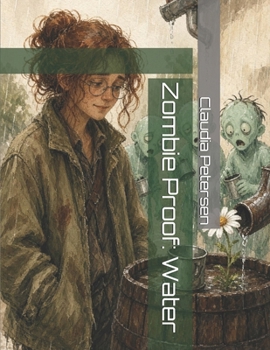
Zombie Proof: Water (Zombie Proof: Surviving The Apocalpse)
No Customer Reviews

What water can still kill you with, and how much of it a person actually needs.
Where It Comes From
Roofs, fog, the pipes that have been waiting, and the weather that lies about the tap.
Making It Drinkable
Settle it, boil it, name the bleach, and do not trust a pocket filter to be a priest.
Keeping It: A dark cupboard, a little height, and a clay pot that waters roots instead of gossip.
The House After: Hot water you will not invent, jobs that belong to other people, and a morning that still has a cup.
The Page You Do Not Skip
The dead may walk. A germ does not need their help, and it will not wait while you decide the water looks fine.
Clear is a compliment, not a test. Water can carry bacteria, viruses, and the stubborn cysts of Giardia and Cryptosporidium, and it can carry them while sparkling like an advertisement for honesty. It can also carry things no kettle will evict: fuels, solvents, heavy metals, the antifreeze somebody put in a pipe to survive a winter, the ash and chemistry a fire left on a roof. Boiling, bleach, and a pocket filter are wonderful at some of these jobs and theatrical at others. Everything after this page - the roof arithmetic, the jokes, the zombie holding a cup upside down - assumes you have already decided to remain alive, and to remain un-poisoned, which is a slightly more specific ambition.
Read this once when you are calm. Read it again when you are thirsty, which is when you will be tempted to skip it.
Format:Paperback
Language:English
ISBN:B0HQRBZQJD
ISBN13:9798140499945
Release Date:November 2026
Publisher:Independently published
Length:57 Pages
Weight:0.47 lbs.
Dimensions:11.0" x 0.1" x 8.5"
Customer Reviews
0 rating
Copyright © 2026 Thriftbooks.com
Terms of Use | Privacy Policy | Do Not Sell/Share My Personal Information | Cookie Notice | Cookie Preferences | Accessibility Statement
ThriftBooks ® and the ThriftBooks ® logo are registered trademarks of Thrift Books Global, LLC
ThriftBooks ® and the ThriftBooks ® logo are registered trademarks of Thrift Books Global, LLC
