


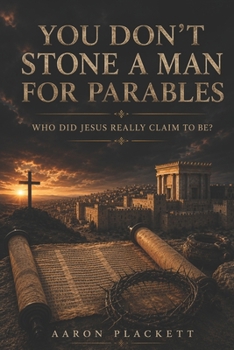
You Don't Stone A Man For Parables: Who Did Jesus Really Claim To Be?

You don't execute a man for telling stories.
Jesus taught in parables.
He preached love, forgiveness, mercy, and compassion.
Yet those teachings alone do not explain what happened to Him.
People argued with Him.
They accused Him of blasphemy.
They attempted to stone Him.
They put Him on trial.
And ultimately, they demanded His death.
Why?
Modern readers are often told that Jesus never claimed to be God. According to this view, He was a prophet, a moral teacher, or a religious reformer whose followers later elevated Him into something more.
But does that claim fit the evidence?
In You Don't Stone a Man for Parables, Aaron Plackett examines the words of Jesus, the reactions of His followers and enemies, the charges brought against Him, and the events that led to His crucifixion.
Rather than asking what modern people think Jesus meant, this book asks a different question:
What did the people who heard Him understand Him to be claiming?
Through a careful examination of the Gospel accounts, this book explores:
- Why Jesus was accused of blasphemy
- Why religious leaders sought His death
- The significance of His authority to forgive sins, judge humanity, and receive worship
- The meaning of the "Son of Man" title
- Why the claim that Jesus never presented Himself as divine has become increasingly popular
- What is at stake if His claims were true
Whether you are a believer, skeptic, former Christian, or simply curious about one of history's most influential figures, this book invites you to examine the evidence for yourself.
Because people do not kill a man for parables.
They kill him for what they believe he is claiming.
Customer Reviews
ThriftBooks ® and the ThriftBooks ® logo are registered trademarks of Thrift Books Global, LLC
