
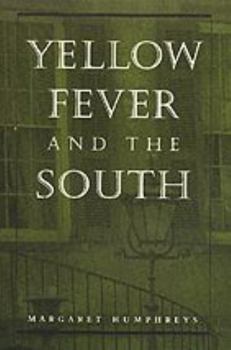
"Yellow Fever and the South" is not about the suffering and death from the repeated visits of this terrifying disease, although it is about the panic. The suffering and death can be found in other histories. Humphreys, a medical doctor, wrote this dissertation for a history degree, and it traces the evolution of public health organization in the South from the Civil War to and a little beyond the last yellow fever epidemic in the United States in 1905. It is full of surprises. Yellow fever was not the greatest killer in the South. TB, typhoid, malaria, and the debilitations of pellagra, hunger, hookworm etc. killed more people. But those deaths were background and people took them as they came. Yellow fever visited sometimes every summer, sometimes not once in a decade. When it did, though, it spread panic. Business was almost shut down. It is Humphreys' contention, no doubt correct, that it was the interruption of business, not suffering and death, that inspired or forced local and state governments to found departments of public health. That was a sword that cut two ways. Since the true vector for the fever was unknown until 1901, cities would invoke quarantine against other cities, which may not have had the disease, for commercial advantage. In the countryside, "shotgun quarantines" of panicked citizens overrode the attempts -- when they were made -- to coordinate the official measures. Because the southerners could not trust each other, by the 1890s they were ready to turn public health over to the national government. This from men who had, in many cases, carried arms for state's rights in the `60s! This makes for pretty dry reading, but the repayment for the effort is understanding how people, as individuals, towns, provinces and nations, react to terrifying epidemics, whether they think they have prophylactics or not. In the 21st century, this lesson has obvious import. Unfortunately, if the time comes, the people who will be loudest and most insistent will be those who are least worth listening to. We've already had an epidemic of that with Tamiflu. Serious people will want to know what's in this book.
ThriftBooks sells millions of used books at the lowest everyday prices. We personally assess every book's quality and offer rare, out-of-print treasures. We deliver the joy of reading in recyclable packaging with free standard shipping on US orders over $20. ThriftBooks.com. Read more. Spend less.

