


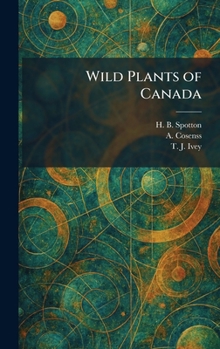
Wild Plants of Canada

"Wild Plants of Canada" serves as a comprehensive and authoritative guide to the diverse botanical landscape of the Canadian provinces. Authored by H.B. Spotton, A. Cosens, and T.J. Ivey, this foundational work provides detailed descriptions and classifications of the native flora found across the vast northern regions of North America. Designed for both the amateur naturalist and the dedicated student of botany, the book categorizes a wide array of species, offering insights into their physical characteristics, habitats, and seasonal patterns.
The text focuses on the systematic identification of trees, shrubs, and wildflowers, making it an invaluable resource for understanding the ecological diversity of the region. By detailing the unique structures of various plant families, the authors offer a window into the natural history of the Canadian wilderness. As a significant contribution to early 20th-century botanical science, "Wild Plants of Canada" remains a vital reference for anyone interested in the study and appreciation of Canadian plant life. Its clear, structured approach ensures that the intricate beauty and scientific importance of these wild species are accessible to a broad audience of nature enthusiasts and educators.
This work has been selected by scholars as being culturally important, and is part of the knowledge base of civilization as we know it. This work was reproduced from the original artifact, and remains as true to the original work as possible. Therefore, you may see the original copyright references, library stamps (as most of these works have been housed in our most important libraries around the world), and other notations in the work.
This work is in the public domain in the United States of America, and possibly other nations. Within the United States, you may freely copy and distribute this work, as no entity (individual or corporate) has a copyright on the body of the work.
As a reproduction of a historical artifact, this work may contain missing or blurred pages, poor pictures, errant marks, etc. Scholars believe, and we concur, that this work is important enough to be preserved, reproduced, and made generally available to the public. We appreciate your support of the preservation process, and thank you for being an important part of keeping this knowledge alive and relevant.
Customer Reviews
ThriftBooks ® and the ThriftBooks ® logo are registered trademarks of Thrift Books Global, LLC
