


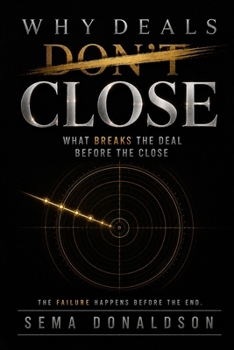
Why Deals Don't Close: What Breaks the Deal Before the Close

How many deals have you lost that you were certain you had already won?
Once is frustrating.
Twice makes you question what you missed.
When it keeps happening, the problem demands a different explanation.
The buyer was engaged. Meetings went well. The opportunity was qualified. You forecast it, invested in it, and expected it to close.
Then momentum weakened. Decisions slipped. New concerns surfaced. Stakeholders changed the equation.
And once again, a deal you were counting on became a deal you had to explain.
The deal was not lost at the close. The close exposed what had already been breaking long before you got there.
Earlier Breakdowns Create Later LossesA deal can continue looking active while moving further away from commitment. Buyer engagement can conceal hesitation. Positive conversations can conceal misalignment. Apparent momentum can conceal conditions that are quietly weakening the decision.
That is why late-stage losses feel sudden.
The failure becomes visible late. It does not necessarily begin there.
Why Deals Don't Close changes where you look for the problem. Instead of treating the final conversation as the decisive moment, you learn to examine what has been developing throughout the opportunity.
Better Diagnosis Creates Earlier InterventionYou cannot respond effectively to a problem you have misread.
When activity is mistaken for progress, you keep following up. When hesitation is mistaken for an objection, you try to persuade. When an opportunity appears stronger than it is, you keep forecasting an outcome the deal may no longer support.
Better diagnosis changes the response.
You learn to distinguish real buying progress from activity that merely keeps a deal alive. Detect declining decision momentum before it becomes obvious. Diagnose why an opportunity is losing strength. Determine which deals require intervention and which no longer deserve your time.
You stop responding to the symptom and start examining what is producing it.
Earlier Recognition Creates More ControlThe earlier you recognize what is changing inside an opportunity, the more choices you still have.
You can investigate sooner. Challenge assumptions sooner. Address instability while the deal is still in motion. And make better judgments about where to invest your time, attention, and confidence.
That is the capability Why Deals Don't Close develops.
Not harder closing.
Not more pressure at the end.
Earlier recognition. Better diagnosis. More informed intervention.
If you are tired of losing deals you were convinced you had already won, learn to recognize what the outcome will eventually reveal while you still have time to respond.
The failure happens before the end. The close is only where it becomes impossible to ignore.
Customer Reviews
ThriftBooks ® and the ThriftBooks ® logo are registered trademarks of Thrift Books Global, LLC
