


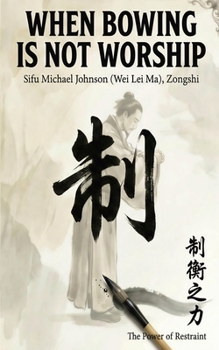
When Bowing Is Not Worship: The Power Of Restraint

This is a book about something most people have never been given language for.
If you have ever walked into a martial arts school, a church, a classroom, or any structured space and felt your body tighten before your mind could explain why - this book is about that. If you have ever been asked to bow, or kneel, or defer, and felt something in you resist without being able to say exactly what it was resisting - this book is about that too.
When Bowing Is Not Worship is not a defense of tradition. I have spent thirty-five years teaching martial arts, and I have seen tradition used to stabilize people and tradition used to consume them. I have watched ritual do the quiet work of containing intensity and making intensity survivable. I have also watched it become a leash. I wrote this book because those two things can look identical from the outside, and because the difference between them is the most important thing I know how to teach.
The people in these pages are real. The man who would not bow for three weeks because his body remembered something his mind had stopped counting. The woman who would not bow to men, who watched for months to find out whether this room was different from the ones that had already cost her something. The student who had spent years in AA and found that sitting quietly on the floor before class was the only hour in his week when he did not have to decide what came next. They did not need ritual to mean something cosmic. They needed it to mean something true.
This book is for people who have been harmed by structures that demanded compliance and called it respect. It is for people who have found something real inside disciplined practice and do not have clean words for why it matters. It is for teachers who want to examine whether what they are building serves the people inside it or feeds on them. It is for parents standing at the edge of a room, arms crossed, trying to decide whether what their child is walking into is safe.
The question this book keeps asking is not whether you should bow. It is whether the space you are in will give you back when it is finished with you. Whether the authority you are working under has edges. Whether the ritual you are practicing returns you to yourself or takes a piece of you with it.
I am a Christian. I am also the head of a Taoist martial lineage. I did not resolve that tension. I stopped believing it needed to be resolved, and something clarified when I did. This book lives in that same space - not choosing sides, not offering doctrine, just watching carefully what happens when human beings enter difficult things together and trying to describe what helps them and what hurts them.
Ritual is older than belief. It is older than the arguments we have about it. The body has always known how to mark a threshold. This book is an attempt to catch up with what the body already understands.
When Bowing Is Not Worship examines the role of ritual, authority, and structured practice in martial arts and beyond - exploring when bowing is a threshold and when it becomes a trap, when authority protects and when it consumes, and how people learn to enter intensity together without losing themselves in it.
Customer Reviews
ThriftBooks ® and the ThriftBooks ® logo are registered trademarks of Thrift Books Global, LLC
