


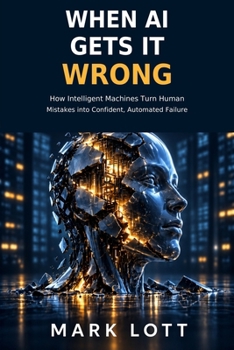
When AI Gets It Wrong: How Intelligent Machines Turn Human Mistakes into Confident, Automated Failure

AI IS LYING TO YOU. SOMETIMES IT DOESN'T EVEN KNOW IT.
And the people building it, selling it, and telling you to trust it aren't necessarily checking the answers either.
We're being sold two extraordinary stories at once.
Artificial intelligence is going to revolutionize everything, eliminate jobs, cure diseases, and make humanity more productive than ever.
Or it's going to destroy civilization, consume our electricity, drain our water supplies, and potentially wipe out humanity.
Both stories can't be accepted as inevitable. So why are so many people buying into them?
Meanwhile, something far more immediate is happening right in front of us.
AI invents facts. It fabricates sources. It tells people what they want to hear. It confidently explains things it doesn't understand. It can write defective software, create tests that approve its own mistakes, and generate convincing arguments from assumptions that were never true.
And here's the frightening part:
Another AI can check the work, agree with every word, and be just as wrong.
The test passes. The dashboard turns green. The experts approve. Everyone congratulates themselves.
Nobody notices they're all wrong.
In When AI Gets It Wrong, Mark Lott takes aim at the uncomfortable truths behind the artificial intelligence revolution-and the human weaknesses that make its failures possible.
Drawing on more than three decades in software engineering, quality assurance, and process improvement, Lott pulls apart the machinery of AI confidence, corporate influence, human bias, and automated decision-making.
He examines questions the AI industry-and its critics-should have to answer:
Who decides what AI is allowed to tell you? And when does a company's preferred answer get mistaken for objective truth?
Why does AI agree with you even when you're wrong? Is it helping you think or reinforcing what you already believe?
Can AI systems manufacture the illusion of proof? What happens when the same mistake gets repeated, verified, and approved by other machines?
Are we being sold an AI apocalypse? Who benefits when speculation about extinction becomes a frightening headline?
Are data centers really going to steal our electricity and drain our water? Or are alarming predictions being presented without the facts and context needed to evaluate them?
Why do expensive AI projects fail despite passing tests and earning approval? And why do organizations keep confusing activity with success?
Who is responsible when an AI agent crosses a boundary nobody intended it to cross?
Lott isn't arguing that AI is useless or that machines are destined to destroy us. Quite the opposite. He uses AI, builds with it, and believes its potential is enormous.
What he refuses to accept is the idea that intelligence equals truth, consensus equals evidence, or a confident prediction deserves unquestioning belief.
He argues that the real danger isn't simply artificial intelligence making mistakes.
It's human beings giving those mistakes authority, credibility, and the power to spread faster than anyone can verify them.
This isn't another book telling you to worship artificial intelligence-or fear it.
It's a challenge to the companies selling it, the experts predicting its future, the institutions controlling its answers, and the millions of people increasingly letting machines do their thinking for them.
THE MACHINE SOUNDS INTELLIGENT.
THE EXPERTS SOUND CERTAIN.
THE EVIDENCE MAY SAY SOMETHING ELSE ENTIRELY.
Before you trust the next AI-generated answer, ask yourself one question:
WHO IS CHECKING THE CHECKER?
Customer Reviews
ThriftBooks ® and the ThriftBooks ® logo are registered trademarks of Thrift Books Global, LLC
