Skip to content
ISBN: 0316075841
ISBN13: 9780316075848

What the Dog Saw

$5.69List Price: $41.00
Save $35.31!
ISBN: 0316075841
ISBN13: 9780316075848
Formats

Conditions

A read copy, but remains in excellent condition.

Formats

Conditions

A read copy, but remains in excellent condition.

See all 26 editionsfrom $5.69

Book Overview

Malcolm Gladwell focuses on "minor geniuses" and idiosyncratic behavior to illuminate the ways all of us organize experience in this "delightful" (Bloomberg News) collection of writings from The New Yorker.

What is the difference between choking and panicking? Why are there dozens of varieties of mustard-but only one variety of ketchup? What do football players teach us about how to hire teachers? What does hair dye tell us about the history of the 20th century?
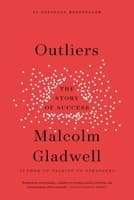
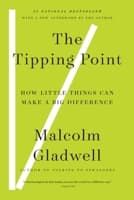
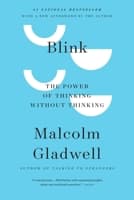
In the past decade, Malcolm Gladwell has written three books that have radically changed how we understand our world and ourselves: The Tipping Point; Blink; and Outliers. Now, in What the Dog Saw, he brings together, for the first time, the best of his writing from TheNew Yorker over the same period.
Here is the bittersweet tale of the inventor of the birth control pill, and the dazzling inventions of the pasta sauce pioneer Howard Moscowitz. Gladwell sits with Ron Popeil, the king of the American kitchen, as he sells rotisserie ovens, and divines the secrets of Cesar Millan, the "dog whisperer" who can calm savage animals with the touch of his hand. He explores intelligence tests and ethnic profiling and "hindsight bias" and why it was that everyone in Silicon Valley once tripped over themselves to hire the same college graduate.
"Good writing," Gladwell says in his preface, "does not succeed or fail on the strength of its ability to persuade. It succeeds or fails on the strength of its ability to engage you, to make you think, to give you a glimpse into someone else's head." What the Dog Saw is yet another example of the buoyant spirit and unflagging curiosity that have made Malcolm Gladwell our most brilliant investigator of the hidden extraordinary.

Format:
Hardcover
Language:
English
ISBN:
0316075841
ISBN13:
9780316075848
Release Date:
October 2009
Publisher:
Little Brown & Company
Length:
410 Pages
Weight:
1.16 lbs.
Dimensions:
1.3″ × 5.6″ × 8.1″
BusinessBusiness & InvestingClassicsEssaysEssays & CorrespondenceHealth, Fitness & DietingHealth, Fitness & DietingJournalism & NonfictionLanguage ArtsLiteraryLiterary Criticism & CollectionsLiteratureLiterature & FictionPsychologyPsychology & CounselingSocial Psychology & InteractionsWriting

More by Malcolm Gladwell

Malcolm Gladwell is a staff writer for The New Yorker and a bestselling author of narrative nonfiction that examines the intersection of science and culture. In 2005, Time Magazine named him one of the 100 Most Influential People.

Customer Reviews

31 customer ratings | 8 reviews
Write a Review

Another thought provoking read by Gladwell

I love how Malcolm Gladwell writes accessible books that fundamentally challenge how you view the world. What the Dog Saw brings together nineteen of his essays, and while not every piece hit the mark for me, the standouts made the collection entirely worth it. The title essay offers fascinating insights into canine perception, while "John Rock's Error" and "The Picture Problem" showcase Gladwell at his best—dissecting complex ideas with ease. Not every essay will captivate every reader, but the anthology remains deeply thought-provoking. If you enjoy Gladwell’s signature curiosity or want a collection of sharp, bite-sized narratives, I highly recommend picking this up.

0

Meh

The mark of a good writer is someone who can resist the urge to use foul language, or, if quoting someone, use asterisks to avoid spelling out profanity. Gladwell is not a good writer.

1

A brilliant and interesting book about things you never would have thought.

This is filled with all sorts of interesting things like Why it's not just pitbulls that bite. Why Doctors are confused about breast cancer and prostrate problems, really on and on it goes it's very good

1

Everyone & Everything Has A Story To Tell

"But what if we look at that problem through someone else's eyes, from inside someone else's head?" writes Malcolm Gladwell in his collection of chosen New Yorker magazine articles. Malcolm has certainly succeeded in writing another entertaining and thought provoking book that inspires the reader to look outside their own world and satisfy their curiosity of how others live and work. Curiosities of how people think, day in, day out, in all types of occupations lead us to inventions like the ez squirt Heinz ketchup bottle! Simple, yet amazingly brilliant! Another book I highly recommend is called "Working on Yourself Doesn't Work: The 3 Simple Ideas That Will Instantaneously Transform Your Life" by Ariel & Shya Kane. Their ideas showed me ways to create and maintain a life worth living with satisfaction and meaning. Good news is you can also hear the Kanes on their radio show titled "Being Here". Pick up either book for entertainment but trust me - you will also find inspiration and awe for the wonders of the world you live in and of which you are a part.

2

Wow, what a surpirsing gem!

I've enjoyed all of Malcolm Gladwell's single-subject books, so I thought I'd give this collection of his articles a chance even though I often find compilations like this to be a let down. I'm positively thrilled I read it. The only drawback may be that my friends and family must be sick to death of listening to me talk about it. A number of things make the book a real standout. The first is Gladwell's own description of what he tries to accomplish when he writes an article. He says he tries to give the reader a sense of "what it feels like" to be the person he's featuring. He does it in spades and throws a lot more into the bargain as well. Amongst the articles, I found a clearer and more engaging explanation of Nassim Taleb's theories than can be found in Taleb's own books. They are brilliant and fascinating and literally gave me new ideas on how to deal with today's stock market conditions. I came to understand why French's mustard has hundreds of successful competitors while Heinz ketchup really has none. I learned better ways to interact with my dog. The list goes on and on. What's so fun is that each article took me into a world different from my own and when I left, I had more than I came in with. Some of it is truly helpful in my life, some will make great cocktail party conversation and some is just fascinating in its own right. Pick this one up and give it a read. I think you'll be glad you did.

7

Like a provocative comedian, Gladwell chooses familiar rocks

Gladwell's subject matter is intentionally, wildly far flung. In addition, one story will go micro and the next will go macro. He revels in the swing. Like a provocative comedian, Gladwell chooses familiar rocks and then breaks them open for the pay off. He exposes the human motivations and the surrounding group dynamics that contribute to any number of calamities. As a premier American Social Scientist, Gladwell is many things; part intuitive savant, part psychologist and sociologist and part investigative interrogator. Above all these gifts, Gladwell is an excellent story teller. He often tackles huge and complex topics with simple unflappable logic. Gladwell's patented "reveal" is his franchise trademark. First he presents an interesting dynamic or problem. He then presents a second, seemingly unrelated problem. Gladwell toggles between the two stories and rolls them out on two long converging lines, logically inching them forward, step-by-step. At the end of each essay, there is a single resolve with an implicit social commentary, (`... the teacher's have an NFL quarterback problem"). He often concedes that knowing the logical answer won't necessarily change the next inevitable outcome. So rest assured, due to our own human nature, curious Mr. Gladwell will never run short of flamboyant material.

3

What the Dog Saw and Other Adventures Mentions in Our Blog