


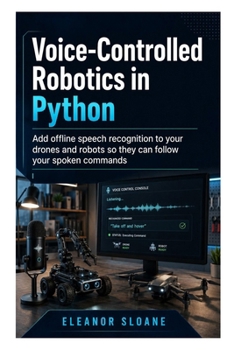
Voice-Controlled Robotics in Python: Add offline speech recognition to your drones and robots so they can follow your spoken commands

Recognising a spoken phrase is not the same as safely controlling a machine.
A microphone may capture the wrong voice. Background noise may change one word into another. A command may be understood correctly but still be unsuitable because the robot is blocked, disconnected, already moving, or in an unsafe operating state.
Voice-Controlled Robotics in Python provides a practical guide to building offline speech interfaces for simulated robots, Raspberry Pi rovers, and PX4-powered drones.
Rather than connecting recognised words directly to motors or flight actions, this book teaches a controlled command pipeline:
Audio capture → Speech recognition → Text normalisation → Intent parsing → Safety validation → Command dispatch → Device control → Feedback and logging
The principal speech-recognition system is Vosk, which processes commands locally after the required model has been installed. Normal operation therefore does not require sending spoken audio to an online speech service. The projects also use sounddevice, NumPy, GPIO Zero, PX4 Software-in-the-Loop, QGroundControl, and MAVSDK-Python.
Inside this project-based guide, you will learn how to:
Understand the difference between transcription, intention, and physical actionDesign a voice-command system as several independently testable componentsPrevent provisional or uncertain recognition results from reaching hardwareCreate a restricted vocabulary for dependable machine commandsChoose short phrases that are less likely to be confusedNormalise recognised text into consistent internal languageConvert written numbers, synonyms, directions, durations, speeds, and altitudesParse speech into structured command objectsValidate actions, values, units, operating states, and confirmation windowsReject unsupported instructions without changing the machine's stateDesign clear accepted, refused, completed, interrupted, cancelled, and failed outcomesCreate a reusable dispatcher and platform-independent device-adapter interfacePreserve a higher-priority stop route for every movement actionRequire separate confirmation for arming, take-off, landing, and return requestThe manuscript's troubleshooting method follows the first incorrect stage rather than changing several unrelated settings. A missing audio level points to the input device; correct audio with incorrect words points to recognition; correct words with the wrong action point to parsing; an accepted command with no movement points to the adapter, connection, power, or hardware.Whether you are a Python learner, Raspberry Pi maker, robotics student, drone developer, educator, accessibility researcher, or engineer exploring hands-free interfaces, this book provides a structured path from microphone testing to a supervised, deployable control system.
Recognise locally. Parse deliberately. Validate every value. Confirm dangerous actions. Keep stop and manual control above speech.
Customer Reviews
ThriftBooks ® and the ThriftBooks ® logo are registered trademarks of Thrift Books Global, LLC
