


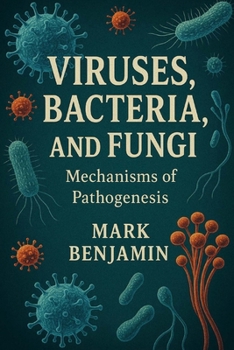
Viruses, Bacteria, and Fungi: Mechanisms of Pathogenesis
No Customer Reviews

This Book explores the diverse microbial world, focusing on viruses, bacteria, and fungi. These microorganisms are ubiquitous and essential for ecological processes like nutrient recycling, but are also significant disease-causing agents in humans, animals, and plants.
The text emphasizes that the colloquial term "germs" oversimplifies these distinct biological entities. Understanding their unique structures, genetics, and life strategies (e.g., acellular viruses requiring hosts, prokaryotic bacteria, eukaryotic fungi) is crucial for developing effective diagnostics, therapies, and control measures in fields like medicine and agriculture. For instance, this distinction explains why antibiotics target bacteria but not viruses or fungi, a vital concept for public health.
Furthermore, the book highlights the duality of these microbes, noting that many are beneficial. Bacteria aid digestion and are used in medicine production, while fungi are key decomposers and are used in food production and pharmaceuticals like penicillin. Pathogenicity is often specific to certain species or contexts.
The book aims to provide a comparative analysis of these three groups, covering their biological characteristics, disease mechanisms, antimicrobial interventions, and the challenge of antimicrobial resistance.
The text emphasizes that the colloquial term "germs" oversimplifies these distinct biological entities. Understanding their unique structures, genetics, and life strategies (e.g., acellular viruses requiring hosts, prokaryotic bacteria, eukaryotic fungi) is crucial for developing effective diagnostics, therapies, and control measures in fields like medicine and agriculture. For instance, this distinction explains why antibiotics target bacteria but not viruses or fungi, a vital concept for public health.
Furthermore, the book highlights the duality of these microbes, noting that many are beneficial. Bacteria aid digestion and are used in medicine production, while fungi are key decomposers and are used in food production and pharmaceuticals like penicillin. Pathogenicity is often specific to certain species or contexts.
The book aims to provide a comparative analysis of these three groups, covering their biological characteristics, disease mechanisms, antimicrobial interventions, and the challenge of antimicrobial resistance.
Format:Paperback
Language:English
ISBN:B0FBBTHYKG
ISBN13:9798285741848
Release Date:May 2025
Publisher:Independently Published
Length:104 Pages
Weight:0.33 lbs.
Dimensions:0.2" x 6.0" x 9.0"
Customer Reviews
0 rating
Copyright © 2026 Thriftbooks.com Terms of Use
| Privacy Policy | Do Not
Sell/Share My Personal Information | Cookie Policy | Cookie Preferences | Accessibility Statement
ThriftBooks® and the ThriftBooks® logo are registered trademarks of Thrift Books Global, LLC
ThriftBooks® and the ThriftBooks® logo are registered trademarks of Thrift Books Global, LLC
