


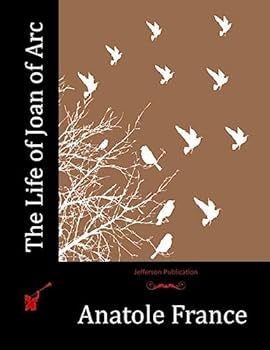
The Life of Joan of Arc
No Customer Reviews

Select Format
Select Condition 
Book Overview
MY first duty should be to make known the authorities for this history. But L'Averdy, Buchon, J. Quicherat, Vallet de Viriville, Sim on Luce, Boucher de Molandon, MM. Robillard de Beaurepaire, Lan ry d'Arc, Henri Jadart, Alexandre Sorel, Germain Lef vre-Pontalis, L. Jarry, and many other scholars have published and expounded various documents for the life of Joan of Arc. I refer my readers to their works which in themselves constitute a voluminous literature, and without entering on any new examination of these documents, I will merely indicate rapidly and generally the reasons for the use I have chosen to make of them. They are: first, the trial which resulted in her condemnation; second, the chronicles; third, the trial for her rehabilitation; fourth, letters, deeds, and other papers.
Format:Paperback
Language:English
ISBN:1515076539
ISBN13:9781515076537
Release Date:July 2015
Publisher:Createspace Independent Publishing Platform
Length:250 Pages
Weight:1.30 lbs.
Dimensions:0.5" x 8.5" x 11.0"
Customer Reviews
0 rating
Copyright © 2026 Thriftbooks.com
Terms of Use | Privacy Policy | Do Not Sell/Share My Personal Information | Cookie Policy | Cookie Preferences | Accessibility Statement
ThriftBooks ® and the ThriftBooks ® logo are registered trademarks of Thrift Books Global, LLC
ThriftBooks ® and the ThriftBooks ® logo are registered trademarks of Thrift Books Global, LLC
