


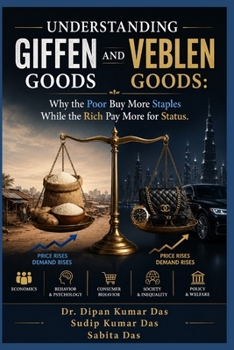
Understanding Giffen and Veblen Goods: Why the Poor Buy More Staples While the Rich Pay More for Status

Chapter 1. The Strange World of Consumer Behavior
Theme: Why people do not always buy according to common economic logic.
Key Topics Law of demand and its exceptions, Why economists were surprised, Introduction to Giffen Goods
Lesson
Price does not always reduce demand.
Theme
How extreme poverty changes consumer choices.
Topics Inferior goods, Necessities versus luxuries, Income effect
Case Study
A construction worker's salary remains unchanged while wheat prices rise by 20%. Unable to afford eggs and vegetables, he purchases additional wheat to meet calorie requirements.
Lesson
The poor often buy survival, not preference.
Theme
The economics behind this unusual behavior.
Topics Budget constraints, Consumer equilibrium
Chapter 4. Poverty, Hunger, and Food SecurityTheme
The social reality behind Giffen Goods.
Topics Malnutrition, Inflation, Food insecurity
Case Study
During inflation, poor households cut protein consumption before reducing staple foods.
Theme
Economic choices under stress.
Topics Scarcity mindset, Survival psychology
Example
A mother chooses ten kilograms of rice over fruits because hunger today is more urgent than nutrition tomorrow.
Lesson Economic behavior is deeply psychological.
Chapter 6. The Birth of Veblen GoodsTheme Thorstein Veblen's revolutionary idea.
Topics Conspicuous consumption, Social signaling
Examples Luxury cars, Designer handbags
Chapter 7. Why Luxury Becomes More Attractive as Prices RiseTheme The economics of prestige.
Topics Exclusivity, Scarcity
Case Study
A luxury handbag becomes more desirable after a 30% price increase because customers perceive greater exclusivity.
Theme
Status in the digital economy.
Case Study An influencer purchases a ₹4 lakh handbag primarily for online visibility.
Chapter 9. Luxury Brands That Sell DreamsTheme
How branding creates value.
Topics-Emotional branding, Storytelling
Discussion
Why do consumers pay ten times more for similar functionality?
Theme Global economic perspectives.
Lesson Economic behavior depends on local realities.
Chapter 11. Veblen Goods Across CulturesTheme
Status symbols differ by society.
Case Study
A family spends beyond its annual income on a wedding to gain social recognition.
Theme
Policy responses.
Topics Inflation control, Food subsidies
Examples Public Distribution System, Food coupons
Discussion
Can government reduce the Giffen Effect?
Theme
Why humans are not perfectly rational.
Topics Bounded rationality, Prospect Theory
Case Study
A middle-income employee buys an expensive phone on EMI to avoid feeling socially left behind.
Theme
Technology predicts purchasing decisions.
Topics AI recommendation systems, Consumer analytics
Discussion
Can AI detect future Giffen or Veblen markets?
Theme
Lessons for individuals, businesses, and policymakers.
Topics Financial literacy, Ethical marketing
Customer Reviews
ThriftBooks ® and the ThriftBooks ® logo are registered trademarks of Thrift Books Global, LLC
