


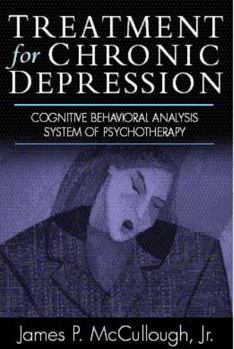
Treatment for Chronic Depression: Cognitive Behavioral Analysis System of Psychotherapy (Cbasp)

Select Format
Select Condition 
Book Overview
This volume describes the Cognitive Behavioral Analysis System of Psychotherapy (CBASP), a research-based approach designed to motivate chronically depressed patients to change and to help them develop needed problem-solving and relationship skills. Integrating elements of cognitive-behavioral and interpersonal therapy, this approach has been shown to be as effective as medication treatment in a recent 12-site national study with 681 chronically depressed outpatients. Even more significant, a combination of CBASP and pharmacotherapy produced a response rate of 85%--unprecedented for any large-scale randomized clinical trial of its kind--and demonstrated for the first time the superiority of combination treatment to either psychotherapy or pharmacotherapy alone. Filled with detailed case examples, the volume presents clear, step-by-step guidelines for using CBASP. Also discussed are ways to measure treatment outcomes; issues in research, training, and supervision; and managing common crises and problems in treatment.
Format:Hardcover
Language:English
ISBN:1572305274
ISBN13:9781572305274
Release Date:November 1999
Publisher:Guilford Publications
Length:326 Pages
Weight:1.39 lbs.
Dimensions:1.1" x 6.3" x 9.2"
Customer Reviews
3 ratings
Great book, but pointless
Published by Thriftbooks.com User , 21 years ago
Until we have a health care system that pays for such treatment, it will only be available to the rich. Given that most of us struggling with chronic depression have spotty work histories and financial problems, it is extremely unlikely that those who most need this kind of therapy will get it. I've had a lifetime of self-rationing medical care, because of the lack of parity for mental health services. Therapists and psychiatrists need to stop writing books and start working toward the political change that would make treatment available to those with chronic depression. Otherwise, your theories are worthless except for a small handful of well-off individuals.
A Patient's Look at a Therapist's Manual
Published by Thriftbooks.com User , 25 years ago
This is one of the few books about depression treatment that is very specifically about chronic depression. Chronic depression here includes minor depression alone, major depression that never ends, and a variety of combinations of major and minor depression that all fall into the chronic category. Functional (or dysfunctional) similarities between early and late onset types are illustrated. McCullough explains the unique pathology of this version of depression and explains why classic cognitive therapy does not work on it all that well. He lays out an interesting theory of just where cognitive development goes awry in patients like us that to me feels organically true. This developmental screw-up can lead to a lifetime of unconscious behavioral and interpersonal crap that does not correct itself spontaneously, ever.Most of the book is a manual for therapists in this strictly yet humanely thought out program that has elements of all the therapy types known to be helpful in depression. CBASP, pronounced "SEE-basp", should be more available than it is right now. The author is clearly experienced and kind and patient and wise. Maybe if more of us patients wave this book around we can get more therapists to see that chronic depression is quite a different beast than intermittent depression, that it is qualitatively different for treatment purposes, and that it apparently is curable after all.
An important new approach to treating depression.
Published by Thriftbooks.com User , 25 years ago
Treatment for Chronic Depression covers the cognitive behavioral analysis system of psychotherapy, a research-based approach designed to help patients change and develop problem-solving and life skills. Chapters advocate this treatment, citing statistics which show it superior to medicine-based treatments and including case histories which bring clinical experiences alive. An important inspection of a new concept in treating depression.
Copyright © 2026 Thriftbooks.com Terms of Use
| Privacy Policy | Do Not
Sell/Share My Personal Information | Cookie Policy | Cookie Preferences | Accessibility Statement
ThriftBooks® and the ThriftBooks® logo are registered trademarks of Thrift Books Global, LLC
ThriftBooks® and the ThriftBooks® logo are registered trademarks of Thrift Books Global, LLC
