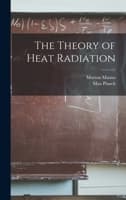
Seeing this book still in print makes me think that not all is lost. For decades everyone looked for Planck's treatise in order to give unity to his or her collection of facts concerning heat, as well as depth to the whole thing. The careful and elegant exposition still satisfies these needs, though the main trends have changed. The purity of the macroscopic approach championed by Planck (in fact a competition against Boltzmann) may seem now an exageration. You will not find interpretations in terms of molecules, for instance. On the other hand, the charm of the purely macroscopic approach is undeniable. After the introductory chapters the reader will notice an emphasis towards chemical equilibrium. This is, in fact, common to almost all thermodynamics texts of that time (Sommerfeld's , for instance) and is due to the fact that one of the main scientific efforts of that time was to try to synthesize ammonia, badly needed for agriculture and explosives (wars were much mo! re frequent then). The problem was eventually solved, for gaseous reagents, by Planck's students Guldberg and Waage and, especially, by Nernst, with the discovery of the third law of thermodynamics. This, by the way, receives a very detailed and interesting treatment in the last chapter, named The Absolute Value of Entropy. This alone would be worth the reading.