


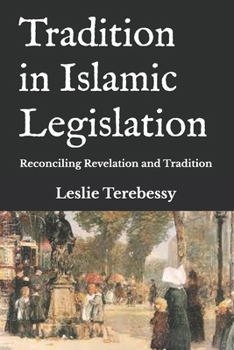
Tradition in Islamic Legislation: Reconciling Revelation and Tradition

The umma is in trauma. Poverty, illiteracy and alienation abound. Clashes rage. This is a result of education that perceives reality in binary terms. It is the heritage of sectarianism. The knowledge of revelation was corrupted by problematic, politicized exegesis, endorsing the political purposes of hawkish rulers. Militant preachers became mercenaries. Where is the unity of the umma? Muslims are blamed for terrorism. The ulama assert that "Islam is not like that." This is true on the assumption that Islam is properly understood. Islam is a teaching of reconciliation. Unfortunately, the pronouncements of militant ulema reveal a different reality. They reveal a tendency to endorse extremism in the propagation of Islam and in Islamic law. The endorsement of aggression finds expression in the shape of jihad al-talab, an expression of political Islam. How was jihad al-talab rendered a "sixth pillar" of Islam? The propagation of religion through compulsion is prohibited in Islam. This transpired as an effect of political pressure, buttressed by the repression of reason. Reason was silenced. The repression of reason enabled departures from key teachings of the Book of Allah. These encompass the teaching that the Book of Allah is unambiguous, detailed and coherent. Among the effects of the repression of reason was the emergence of the teaching of predestination. According to this teaching, embraced by traditional ulema and those that follow them, there is no connection between cause and effect because Allah predestines everything. This means that we are not responsible for anything because Allah predetermines all events, not excluding His servants transgressions. We have no freedom. The tendency to excess is reflected in the embedding of punishments in the legislation that are harsher than those prescribed in revelation. The death penalties for apostasy, adultery and blasphemy furnish examples of juristic excess. Allah states that He does not change the condition of people until they change what is in themselves. Did Muslims alter what is in themselves? The answer is in the affirmative. What changed was that a connection with revelation was exchanged for a connection with a "second revelation." This second revelation is tradition. Was there a reorientation from revelation to tradition? Does revelation encourage following the traditions of the predecessors in preference to revelation? Problems multiplied with the rejection of reason, based upon recourse to a tradition that treats the use of reason in religion with unbelief. To be better Muslims, persons that embraced this tradition reduced their reliance on reason. They became bereft of reason. As a result, they began to misunderstand the teaching of revelation. Following the "prophetic tradition" became a requirement. Whoever refused to abide by traditions was branded an unbeliever. But there are problems. The authentication of traditions necessitates the use of reason. But after the completion of authentication, reason was subordinated to tradition. In time, revelation was also subordinated to tradition. Tradition judged, abrogated and replaced parts of revelation. Then reason, tradition as well as revelation were subordinated to the writings of the ulema, who became the chief arbiters. They became the preeminent authorities, even able to replace parts of revelation. The ulema's recourse to the teaching of abrogation enabled them to tamper with the teaching of revelation. By alleging that all verses that teach reconciliation were "abrogated," hawkish ulema transformed the religion of peace into a religion of war. Renewal requires the desacralization of tradition, the rejection of dual revelation, the rehabilitation and re-engagement of reason, the rehabilitation of epistemology, the rejection of the teachings of predestination and abrogation, the rejection of jihad al-talab, and a re-affirmation the pre-eminence of revelation as the root of all legislation.
Customer Reviews
ThriftBooks ® and the ThriftBooks ® logo are registered trademarks of Thrift Books Global, LLC
