


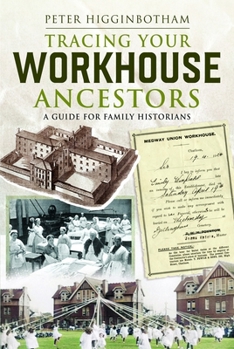
Tracing Your Workhouse Ancestors: A Guide for Family Historians
No Customer Reviews

Workhouse records and roles from seventeenth-century poor relief to 1948 reveal ancestors as inmates, staff, and suppliers. For anyone investigating their family history, there is a strong chance that a connection with the workhouse will surface at some point. An ancestor may turn up as a workhouse inmate in the census, or their death certificate may have recorded it as the location of their demise. However, many of our forebears were linked to the workhouse in other ways, such as working there, using its medical facilities, supplying it with bread or coffins, or being part of the administration that ran the workhouse and the wider poor relief system. From its roots in the seventeenth century, up until its final passing with the creation of Britain's welfare state in 1948, the workhouse evolved enormously. Thanks to the picture painted by Charles Dickens in Oliver Twist, it is all too see it as a relentlessly grim and harsh institution. But how true was that? Workhouses, particularly those operating during and after the Victorian period, kept a wide variety of records. Although many of these have not survived, this book will help you navigate the many and various of information that those that do exist, both in archives and online. Whether you are interested in workhouse buildings, workhouse staff, the inmates' admission and discharge procedures, their diet, their work, their discipline, or even how they were buried, this is the book for you. Although primarily focused on England and Wales, the book also includes chapters on the workhouse in Ireland and the poorhouse in Scotland.
Format:Paperback
Language:English
ISBN:103614982X
ISBN13:9781036149826
Release Date:May 2027
Publisher:Pen and Sword Family History
Related Subjects
ReferenceCustomer Reviews
0 rating
Copyright © 2026 Thriftbooks.com
Terms of Use | Privacy Policy | Do Not Sell/Share My Personal Information | Cookie Notice | Cookie Preferences | Accessibility Statement
ThriftBooks ® and the ThriftBooks ® logo are registered trademarks of Thrift Books Global, LLC
ThriftBooks ® and the ThriftBooks ® logo are registered trademarks of Thrift Books Global, LLC
