


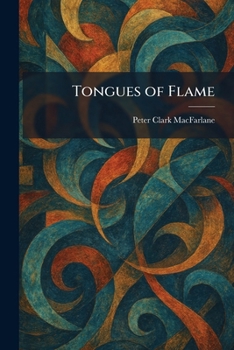
Tongues of Flame

Select Format
Select Condition 
Book Overview
"Tongues of Flame" is a powerful dramatic novel set against the rugged backdrop of the Pacific Northwest during the early 20th century. The story follows Henry Harrington, a man of integrity and a veteran of the Great War, as he returns to his home in the coastal timberlands. Harrington finds himself embroiled in a high-stakes legal and moral battle over land rights, particularly involving the claims of the local Native American population against encroaching corporate interests.
The narrative explores themes of justice, greed, and the tension between industrial progress and preservation. As a lawyer, Harrington must navigate a web of corruption and local politics to protect the heritage of the land and the rights of those being exploited. With its vivid descriptions of the Oregon coast and its intense focus on the character's moral conviction, "Tongues of Flame" stands as a compelling example of early American social realism and adventure fiction. The work captures the spirit of a changing nation, blending a courtroom drama with the raw energy of the American frontier. Readers will find a timeless struggle for truth in this gripping portrayal of personal honor versus systemic greed.
This work has been selected by scholars as being culturally important, and is part of the knowledge base of civilization as we know it. This work was reproduced from the original artifact, and remains as true to the original work as possible. Therefore, you may see the original copyright references, library stamps (as most of these works have been housed in our most important libraries around the world), and other notations in the work.
This work is in the public domain in the United States of America, and possibly other nations. Within the United States, you may freely copy and distribute this work, as no entity (individual or corporate) has a copyright on the body of the work.
As a reproduction of a historical artifact, this work may contain missing or blurred pages, poor pictures, errant marks, etc. Scholars believe, and we concur, that this work is important enough to be preserved, reproduced, and made generally available to the public. We appreciate your support of the preservation process, and thank you for being an important part of keeping this knowledge alive and relevant.
Customer Reviews
ThriftBooks ® and the ThriftBooks ® logo are registered trademarks of Thrift Books Global, LLC
