


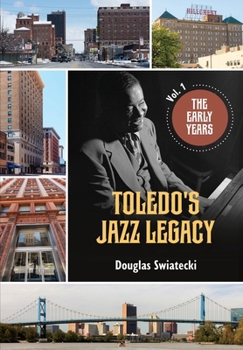
Toledo's Jazz Legacy: The Early Years Vol.1

Toledo's Jazz Legacy: The Early Years Vol. 1 reveals a remarkable and largely overlooked chapter of American music history. While cities such as New Orleans, Chicago, and New York are widely celebrated as jazz capitals, this book argues that Toledo, Ohio played a far more significant role in shaping the early development of jazz than previously recognized.
Drawing on archival research, personal interviews, and newly uncovered historical material, Douglas Swiatecki traces how Toledo's booming early-twentieth-century economy-driven by industry, transportation, and immigration-created fertile ground for a vibrant jazz culture. As soldiers returned from World War I and the Great Migration reshaped the city's population, theaters, clubs, restaurants, and underground venues filled with audiences hungry for new sounds.
Readers are introduced to the city's early jazz geography through a detailed "jazz map" highlighting influential locations such as the Waiters and Bellman's Club, Rusty's Jazz Caf , Murphy's Place, the Trianon, and many others that helped define Toledo's musical identity. The book also uncovers surprising connections between Toledo and some of jazz's most important innovators.
Among the figures explored are stride piano pioneer James P. Johnson-whose overlooked years in Toledo helped shape his development-and the legendary Art Tatum, widely regarded as one of the greatest pianists in jazz history. Swiatecki presents newly revealed family correspondence and historical insights into Tatum's early life, offering readers fresh perspective on his formative years.
Through stories of musicians, venues, technological innovation, and cultural change, Toledo's Jazz Legacy restores Toledo to its rightful place in jazz history and celebrates a vibrant musical community whose influence reached far beyond the city's borders.
Customer Reviews
ThriftBooks ® and the ThriftBooks ® logo are registered trademarks of Thrift Books Global, LLC
