


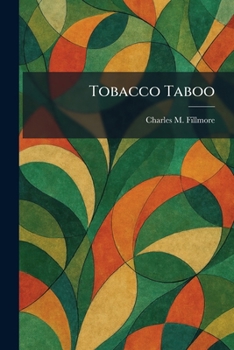
Tobacco Taboo

Select Format
Select Condition 
Book Overview
"Tobacco Taboo" by Charles M. Fillmore presents a persuasive examination of the social, moral, and physical arguments against tobacco use during the early 20th century. Written at a time when movements for social purity and temperance were at their peak, this work outlines the various ways in which the use of tobacco was perceived as a threat to both individual health and the collective well-being of society.
Fillmore explores the physiological impact of nicotine and the broader ethical implications of habit-forming substances. The text provides a fascinating glimpse into the rhetoric of reform, focusing on themes of clean living and self-discipline. As a primary source from the 1930s, "Tobacco Taboo" reflects the historical tensions between personal habits and public health advocacy. This work is an essential read for those interested in the history of American social movements, the evolution of public health campaigns, and the cultural history of substance prohibition. It stands as a significant artifact of a bygone era's efforts to shape public morality and encourage a healthier lifestyle through the rejection of what was then considered a pervasive social vice.
This work has been selected by scholars as being culturally important, and is part of the knowledge base of civilization as we know it. This work was reproduced from the original artifact, and remains as true to the original work as possible. Therefore, you may see the original copyright references, library stamps (as most of these works have been housed in our most important libraries around the world), and other notations in the work.
This work is in the public domain in the United States of America, and possibly other nations. Within the United States, you may freely copy and distribute this work, as no entity (individual or corporate) has a copyright on the body of the work.
As a reproduction of a historical artifact, this work may contain missing or blurred pages, poor pictures, errant marks, etc. Scholars believe, and we concur, that this work is important enough to be preserved, reproduced, and made generally available to the public. We appreciate your support of the preservation process, and thank you for being an important part of keeping this knowledge alive and relevant.
Customer Reviews
ThriftBooks ® and the ThriftBooks ® logo are registered trademarks of Thrift Books Global, LLC
