


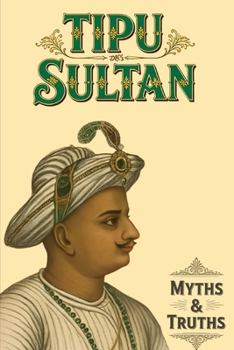
Tippu: Myths & Truths
No Customer Reviews

The book counters contemporary political and communal distortions of Tipu Sultan's legacy by re-evaluating historical evidence objectively. While a practicing Muslim, Tipu actively engaged with Hindu traditions, consulted Vedic scholars and the Panchanga, and patronized roughly 150 temples. He aided the Shankaracharya of the Sringeri Sharada Peetha after it was raided by Maratha Pindharis, financing its reconsecration and gifting rare ornaments. At his death, Tipu was wearing a gold ring inscribed with "Ram" in Devanagari script, which was later taken by the British and auctioned. The author refutes allegations of anti-Kannada bias, noting that Persian administrative terms predated Tipu and that the Wodeyars also used Persian-inscribed royal seals. He demonstrated administrative foresight by banning liquor throughout Mysore and laying the original foundation stone for a dam across the Kaveri at Kannambadi. Claims that Tipu massacred 80,000 Kodavas at Devatti Parambu are debunked as modern demographic and historical impossibilities absent from contemporary accounts. Following the Third Anglo-Mysore War in 1792, Tipu endured the deep personal sacrifice of surrendering his two young sons as hostages to Lord Cornwallis. Tipu refused the British Subsidiary Alliance and died fighting in active combat on May 4, 1799, refuting modern myths of his assassination by Urigowda and Nanjegowda. Despite betrayal by internal ministers like Mir Sadiq and Diwan Purnaiah, Tipu's defiance against British colonialism made him an enduring anti-colonial folk hero celebrated in Kannada lavani songs.
Format:Paperback
Language:English
ISBN:B0HNMKSBZ8
ISBN13:9798163855506
Release Date:October 2026
Publisher:Independently Published
Length:42 Pages
Weight:0.15 lbs.
Dimensions:0.1" x 6.0" x 9.0"
Related Subjects
HistoryCustomer Reviews
0 rating
Copyright © 2026 Thriftbooks.com
Terms of Use | Privacy Policy | Do Not Sell/Share My Personal Information | Cookie Notice | Cookie Preferences | Accessibility Statement
ThriftBooks ® and the ThriftBooks ® logo are registered trademarks of Thrift Books Global, LLC
ThriftBooks ® and the ThriftBooks ® logo are registered trademarks of Thrift Books Global, LLC
