


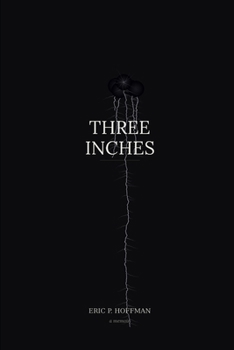
Three Inches: A Memoir

Three inches. That is the distance between the life I have and the one I did not get.
In 2017, Eric P. Hoffman drove his car into a tree in Westchester, New York. The steel frame held by three inches. He survived with a broken nose, a shattered leg, and the one thing almost nobody gets and almost nobody wants: his own death, made real.
What followed was not a recovery. It was a dismantling. Two years of fog, guilt, and the specific shame of a man who survived something he caused. A marriage that could not bear the weight. A career rebuilt during a pandemic, studying for the bar exam six hours a day in a locked house. A therapist named Chase, whose one job was to sit on the other side of a screen and decline to be impressed. And, eventually, a woman named Kseniya, who showed up without expectation and stayed.
Three Inches is a literary memoir about mortality, written for men who know they are going to die and have built their entire lives so they never have to feel it. It draws on the Stoic philosophers who understood death best (Epictetus, Marcus Aurelius, Seneca), the anthropologist who named our denial of it (Ernest Becker), the psychiatrist who survived the Nazi camps and found what keeps a man alive when everything else has been taken (Viktor Frankl), and the social psychologists who measured what happens when ordinary people are reminded, even gently, that their time is running out.
It is not a self-help book. There are no exercises, no affirmations, no five-step plans. It is one man's account of hitting a tree and spending years trying to understand what the tree handed him, set down as plainly and as honestly as he can manage, for anyone willing to sit still long enough to feel it.
Customer Reviews
ThriftBooks ® and the ThriftBooks ® logo are registered trademarks of Thrift Books Global, LLC
