


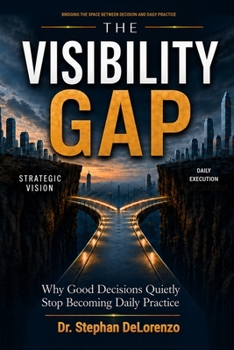
The Visibility Gap: Why Good Decisions Quietly Stop Becoming Daily Practice

What happens when a good decision survives the meeting-but not the months that follow?
A process is created. Expectations are communicated. Training is completed. For a while, everything appears to work.
Then leadership moves on.
Months later, an incident, missed responsibility, or unexpected failure reveals the truth: the organization is no longer doing what leaders believed it was doing.
In The Visibility Gap: Why Good Decisions Quietly Stop Becoming Daily Practice, Dr. Stephan DeLorenzo examines the space between strategic vision and daily execution-the place where priorities drift, accountability weakens, and good decisions quietly become old conversations.
Through a concise and engaging executive leadership parable, this book shows why capable people can struggle inside systems that depend too heavily on memory, personality, assumptions, and heroic follow-up. It explores why important responsibilities disappear during turnover, why successful employees do not automatically become effective managers, and why reports, updates, and green checkmarks can create a false sense of control.
You will learn how to:
- Recognize organizational drift before it becomes a crisis
- Close the gap between leadership decisions and daily practice
- Turn priorities into visible, repeatable action
- Preserve critical responsibilities through turnover and leadership transitions
- Create accountability without losing trust
- Replace vague updates and checkmarks with appropriate, reviewable evidence
- Help managers lead with greater consistency and confidence
- Build systems that support motivation, recognition, and fair accountability
- Clarify expectations, verify results, and strengthen people and processes
This is not a call for more meetings, more reports, more surveillance, or more pressure.
It is a practical approach to creating the visibility leaders need and the structure people need to succeed.
Because confidence does not come from assuming the system is working. It comes from having an honest way to know.
If you have ever said, "I thought we were still doing that," this book is for you.
When leaders can see what matters, teams can do what matters.
Customer Reviews
ThriftBooks ® and the ThriftBooks ® logo are registered trademarks of Thrift Books Global, LLC
