


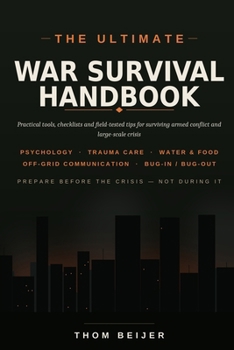
The Ultimate War Survival Handbook: Practical tools, checklists and field-tested tips for surviving armed conflict and large-scale crisis

When the shops empty and the lights go out, the first 72 hours are yours alone.
Most people come through a crisis not because they were lucky, but because they were ready. This handbook turns that readiness into something any household can build - calmly, cheaply, and long before the sirens.
It isn't about bunkers, camouflage or fear. It's about two weeks of water and food, a cheap radio, a first-aid course, and a plan written down before you need it. The dull version is the one that works.
Inside you'll find clear, practical guidance on:
Keeping your head - managing panic, fear and the long grind of a crisisStopping the bleeding - trauma basics for when no ambulance is comingWater & food - finding, purifying and storing enough for two weeksStaying connected - radios, signals and a family plan for when networks failBug in or bug out - a 60-second decision framework and a 72-hour bagLight, heat, power & security - running a household through a long blackoutFinding food in the wild - foraging, fishing and reading the landEvery chapter ends with a checklist you can actually work through. There are tables to print, a family communication card to fill in, and twice-a-year drills to rehearse - because in an emergency you don't rise to the occasion, you fall back on what you've practised.
Whether you're preparing for armed conflict, a natural disaster, or a long power outage, this is the calm, practical companion that helps you protect the people who depend on you.
Build your kit quietly. Train your hands honestly. Then get back to living well.
This book is for general information and preparedness education. It is not a substitute for professional medical, legal, or emergency advice or training.
Customer Reviews
ThriftBooks ® and the ThriftBooks ® logo are registered trademarks of Thrift Books Global, LLC
