


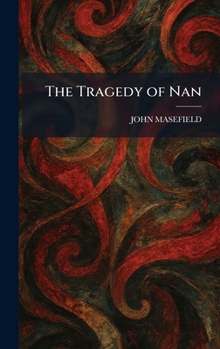
The Tragedy of Nan

Select Format
Select Condition 
Book Overview
"The Tragedy of Nan" is a powerful and haunting play set in the rural landscape of Gloucestershire along the banks of the River Severn in 1810. Written by John Masefield, this intense domestic tragedy centers on Nan Hardwick, a young woman burdened by the social stigma of her father's unjust execution for sheep-stealing. Living in a household marked by the cruelty of her aunt and the indifference of her uncle, Nan seeks solace in her love for Dick Gurvil, only to face a devastating betrayal that leads to a shattering conclusion.
Drawing on the traditions of folk drama and the stark realism of country life, "The Tragedy of Nan" explores themes of legal injustice, the corrosive nature of malice, and the vulnerability of the marginalized. Masefield's lyrical language and deep empathy for his protagonist elevate the humble setting into a stage for universal human suffering. As a significant work of early 20th-century English theater, the play remains a poignant examination of the harshness of fate and the search for dignity amidst cruelty.
This work has been selected by scholars as being culturally important, and is part of the knowledge base of civilization as we know it. This work was reproduced from the original artifact, and remains as true to the original work as possible. Therefore, you may see the original copyright references, library stamps (as most of these works have been housed in our most important libraries around the world), and other notations in the work.
This work is in the public domain in the United States of America, and possibly other nations. Within the United States, you may freely copy and distribute this work, as no entity (individual or corporate) has a copyright on the body of the work.
As a reproduction of a historical artifact, this work may contain missing or blurred pages, poor pictures, errant marks, etc. Scholars believe, and we concur, that this work is important enough to be preserved, reproduced, and made generally available to the public. We appreciate your support of the preservation process, and thank you for being an important part of keeping this knowledge alive and relevant.
Related Subjects
History Literary Literary Criticism & Collections Literature Literature & Fiction PoetryCustomer Reviews
ThriftBooks ® and the ThriftBooks ® logo are registered trademarks of Thrift Books Global, LLC
