


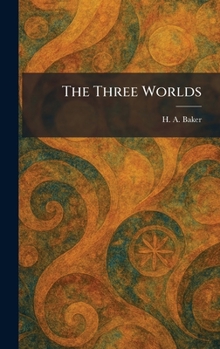
The Three Worlds

Select Format
Select Condition 
Book Overview
"The Three Worlds" is a profound theological exploration into the spiritual dimensions that define human existence and the afterlife. Written by the renowned missionary H.A. Baker, this work delves into the intricate relationship between the physical world, the demonic underworld, and the celestial kingdom of God. Baker utilizes a scriptural foundation to provide readers with a comprehensive understanding of Christian eschatology and the unseen forces that influence the earthly plane.
The text systematically examines the nature of heaven, earth, and hell, offering vivid insights into the spiritual warfare that characterizes the believer's journey. By bridging the gap between biblical prophecy and spiritual experience, Baker seeks to illuminate the mysteries of the spirit world and the eternal destiny of the soul. This book serves as an essential resource for those interested in Pentecostal theology, divine revelation, and the deeper meanings of the supernatural order.
Through its rigorous analysis of the three distinct realms of existence, "The Three Worlds" remains a significant contribution to religious literature, challenging readers to consider their place within the vast cosmic design of the Creator and the spiritual realities that lie beyond the veil of the material world.
This work has been selected by scholars as being culturally important, and is part of the knowledge base of civilization as we know it. This work was reproduced from the original artifact, and remains as true to the original work as possible. Therefore, you may see the original copyright references, library stamps (as most of these works have been housed in our most important libraries around the world), and other notations in the work.
This work is in the public domain in the United States of America, and possibly other nations. Within the United States, you may freely copy and distribute this work, as no entity (individual or corporate) has a copyright on the body of the work.
As a reproduction of a historical artifact, this work may contain missing or blurred pages, poor pictures, errant marks, etc. Scholars believe, and we concur, that this work is important enough to be preserved, reproduced, and made generally available to the public. We appreciate your support of the preservation process, and thank you for being an important part of keeping this knowledge alive and relevant.
Customer Reviews
ThriftBooks ® and the ThriftBooks ® logo are registered trademarks of Thrift Books Global, LLC
