


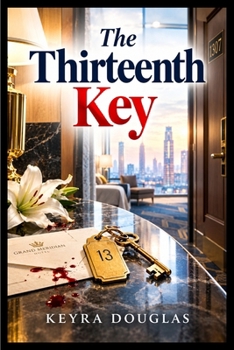
The Thirteenth Key

Detective Nora Quinn arrives at the Grand Meridian Hotel before dawn to investigate the death of financier Arthur Vance in a sealed, unlisted room on the thirteenth floor. The hotel's digital directory skips Suite 1313, its official floor plan denies that the space exists, and a surveillance feed claims nobody approached the door all night. Yet blood is seeping from the room, the electronic lock appears untouched, and the physical evidence contradicts the hotel's immaculate records.With veteran detective Marcus Reyes, Nora faces private security officers and a management team determined to preserve corporate secrecy. The case exposes a hidden suite protected by sophisticated access controls and administrative overrides. What first appears to be an impossible locked-room homicide soon points toward a deliberate system for manipulating architecture, records, and surveillance. The hotel's technology does not simply fail; it presents an alternate version of reality that powerful people expect everyone to accept.Nora follows the evidence through the building's concealed infrastructure and the history of those who controlled it. The investigation connects Vance's death to a wider pattern of institutional corruption, in which private interests have treated public law as an inconvenience and used hidden spaces to keep their actions beyond scrutiny. Nora's method is practical and exacting: she tests what the building physically does against what its screens and databases claim, refusing to let software overrule measurable facts.The confrontation with Adrian Brand reveals the danger of turning technical control into private justice. Brand believes corruption gives him the right to dictate rules inside his engineered enclosure. Nora breaks that illusion through physical measurements, old plans, and patient homicide work. The hotel is eventually placed under municipal receivership, and the corporate overrides concealing the room are revoked.In the aftermath, Nora receives a permanent ceramic master bypass designed to make the building answer to the law instead of its former operators. The restored directory finally lists Suite 1313, and the lock responds directly to a physical key rather than an invisible corporate chain of permission. The Thirteenth Key closes on a hard-won change in principle: buildings may hide evidence, but they must not be allowed to erase the public's right to know what is real.
Customer Reviews
ThriftBooks ® and the ThriftBooks ® logo are registered trademarks of Thrift Books Global, LLC
