


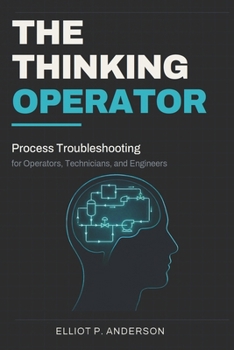
The Thinking Operator: Process Troubleshooting for Operators, Technicians, and Engineers

A working method for troubleshooting process problems - and the discipline to keep it from going wrong.
A reading climbs. An alarm comes in. A pump is running hot, a column is flooding, a compressor is surging, a control loop is hunting. You have to figure out what's wrong and what to do about it, often fast, often with the unit still running. The Thinking Operator is a field-tested method for working those problems start to finish: notice the deviation, find what started it, generate the causes you'd otherwise skip, narrow the field, test before you commit, and make the move safely.
The book walks the full sequence the way it actually happens on the board. You'll work real failures - fouled exchangers, cavitating pumps, lying instruments, runaway loops - and learn to tell a root cause from a symptom, a real reading from a stuck one, and a problem that needs action right now from one you can watch. When a single deviation becomes a board full of alarms, the method still holds; it just runs shorter.
Underneath all of it is one question that separates operators who guess from operators who diagnose: compared to what? A reading by itself means nothing. Two hundred fifteen degrees is good, bad, or expected, and you can't tell which until you know what it should be for this service, this load, this unit. The most costly troubleshooting error isn't having no answer. It's having a confident answer you never checked. This book trains the half-second of friction that catches it.
You'll also get two short sets of questions to carry to the board - three to check your diagnosis before you trust it, three to check the consequences before you act - plus a reference appendix of common problems by equipment type: pumps, compressors, exchangers, columns, furnaces, control valves, and instrument loops.
Written for process plant operators, board operators, maintenance technicians, and engineers across the chemical, refining, and process industries - whether you've run a unit for twenty years or three months.
Customer Reviews
ThriftBooks ® and the ThriftBooks ® logo are registered trademarks of Thrift Books Global, LLC
