


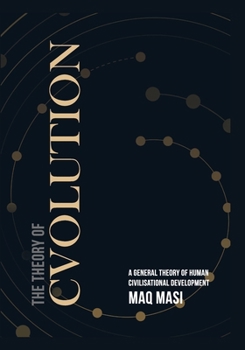
The Theory of Cvolution: A General Theory of Human Civilisational Development

Is there a universal process that governs development itself?
For centuries, philosophers, historians, economists, political scientists, biologists, and sociologists have sought to explain why individuals learn, organisations grow, institutions endure, species evolve, and civilisations rise and fall. Each discipline has revealed important insights, yet no single framework has explained the underlying process common to them all.
The Theory of Cvolution presents a bold and original answer.
Developed through years of philosophical investigation, this book proposes a general theory of human civilisational development founded on a single question: What is the universal process that makes development possible?
Rather than viewing civilisation simply through its cities, governments, technologies, or historical events, the Theory of Cvolution investigates the deeper process through which capability emerges, knowledge accumulates, institutions develop, societies transform, and civilisations continually adapt to changing reality.
This work engages with the ideas of Aristotle, Ibn Khaldun, Hegel, Marx, Darwin, Toynbee, Spengler, Weber, Durkheim, Braudel, Acemoglu and Robinson, Diamond, Harari, Henrich, and many others, positioning the Theory of Cvolution within the wider history of philosophy and civilisational thought.
Inside this book you will discover:
- A systematic theory of development derived from first principles.
- A new framework for understanding capability, adaptation, limitation, progress, decline, and collapse.
- A comparative examination of the world's leading theories of civilisation and development.
- A formal philosophical framework supported by precise definitions, propositions, and logical derivations.
Written for philosophers, historians, economists, political scientists, organisational leaders, educators, researchers, and readers interested in the deeper forces shaping humanity, The Theory of Cvolution invites readers to consider one of the most fundamental questions ever asked:
Is development governed by universal principles?
If so, the implications extend far beyond civilisation itself.
Related Subjects
PhilosophyCustomer Reviews
ThriftBooks ® and the ThriftBooks ® logo are registered trademarks of Thrift Books Global, LLC
