


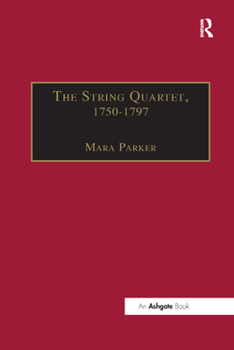
The String Quartet, 1750-1797: Four Types of Musical Conversation
No Customer Reviews

Select Format
Select Condition 
Book Overview
Looking at a wide variety of string quartets by composers such as Pleyel, Distler and Filtz, in addition to Haydn and Mozart, the book proposes a new way of describing the relationships between the four instruments in different works. Broadly speaking, these relationships follow one of four patterns: the 'lecture', the 'polite conversation', the 'debate', and the 'conversation'. In focusing on these musical discourses, it becomes apparent that each work is the product of its composer's stylistic choices, location, intended performers and intended audience. Instead of evolving in a strict and universal sequence, the string quartet in the latter half of the eighteenth century was a complex genre with composers mixing and matching musical discourses as circumstances and their own creative impulses required.
Format:Paperback
Language:English
ISBN:1138384089
ISBN13:9781138384088
Release Date:September 2018
Publisher:Routledge
Length:336 Pages
Weight:1.04 lbs.
Dimensions:0.7" x 6.1" x 9.2"
Customer Reviews
0 rating
Copyright © 2026 Thriftbooks.com
Terms of Use | Privacy Policy | Do Not Sell/Share My Personal Information | Cookie Notice | Cookie Preferences | Accessibility Statement
ThriftBooks ® and the ThriftBooks ® logo are registered trademarks of Thrift Books Global, LLC
ThriftBooks ® and the ThriftBooks ® logo are registered trademarks of Thrift Books Global, LLC
