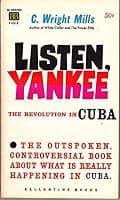
C. Wright Mills is best remembered for his highly acclaimed work The Sociological Imagination , in which he set forth his views on how social science should be pursued. Hailed upon publication as a cogent and hard-hitting critique, The Sociological Imagination took issue with the ascendant schools of sociology in the United States, calling for a humanist sociology connecting the social, personal, and historical dimensions of our lives. The sociological imagination Mills calls for is a sociological vision, a way of looking at the world that can see links between the apparently private problems of the individual and important social issues. This description may be from another edition of this product.
I got a picture of a child during winter 04/05, in page 38-39 if anyone has info please lmk
By Calico Bailey, January 6, 2025
Verified Purchase
Heres my email to reach me if its yours Madeupskeleton@gmail.com
0
★★★★★
Must read for sociologists
By Cool Ranch, July 5, 2022
Verified Purchase
There’s a reason why this is in every intro to sociology course it is phenomenal informative and sometimes entertaining can’t recommend enough
0
★★★★★
Classic and still relevant
By Thriftbooks.com User, June 19, 2007
Probably one of the most influential books in modern sociology, combining not only a wonderful characterisation of styles of sociology but also a commitment to interpreting the world and changing it. His appendix "On Intellectual Craftmanship" is a chapter I have ALL my graduate students read every year, and would wish all social scientists did so!
0
★★★★★
Read, imagine, live
By Thriftbooks.com User, September 13, 2005
A classic of sociological thought, and one of the best (if not the best) accounts on the purpose and tasks of sociological mindset. Sociological imagination (or perspective, if you will) as intersection of biography and history - pure and simple, yet succinctly incisive and elegantly descriptive. Still a very relevant, influential and timely text for each and all.
0
★★★★★
Robust Problems Define Excellence
By Thriftbooks.com User, July 13, 2001
TThis is a masterful work by an original thinker. Wright was concerned with the developments that he was seeing in the social sciences in his time. He was concerned that the social sciences was developing in ways that limited its value to humanity and therefore to itself. He saw the social science of his day as working against true freedom in society by allowing itself to be used to manipulate the population into unthinking acceptance of established authority.He saw two major trends that removed the social sciences from addressing robust problems whose solution would make genuine differences to humanity. The first was a retreat into 'Theory' so abstract that it was unable to describe anything of significance. Wright uses as an example an article that describes a theory of human relationships that was so abstracted from reality that, as Wright shows, it could not capture the fact that sometimes people accept the norms of their society unwillingly. This theory was wrapped in such opaque jargon to unambiguously define the trivial that it last all relationship to genuine society.Wright also identifies as a further development in the social sciences, an empiricism so constrained by technique that it can only address the most specific and mundane problem. If theory has become to remote and abstract to contact real society this empiricism is equivalent in being so immersed in the specifics of a society that it cannot capture more than the trivial.Wright's book is a plea to social scientists to abandon these two enterprises and to return to a social science which is concerned with problems whose solutions will change society,. He calls the ability to find and understand such problems the sociological imagination. He sees practitioners of this form of sociology as inherently political. They may not be in political office but they make their findings known to be acted upon in the political milieu. Wright sees this as a way to genuine freedom in that the governed will know the structure of the society that is governing them and can then freely choose to live within it or to make changes. Wright is concerned that the social sciences of his time were not used to promote this genuine understanding of society by the population but to manipulate them into a passive acceptance of norms that may not be in their interest. He is afraid of a beneficent tyranny with a population of what he calls happy robots.This book is a denunciation of passive acquiescence and a plea for informed acceptance as the basis of society. Wright's fears are as valid today as when he wrote them over 40 years ago.
1
★★★★★
A Masterpiece in the Literature of the Social Sciences!
By Thriftbooks.com User, May 22, 2001
I first came across this book when I was an undergraduate doing a course on introduction to sociology. It was on the required reading list. I had to confess, when I first encountered it, I did not know what to make of the book nor what the fuss was all about.Now, many years later, I have just finished re-reading the book and am now convinced why this is a classic in the literature of the Social Sciences. Mills in this book seeks to advocate a certain ideal in the discipline of sociology. Known as the sociological imagination, he advocates the idea of using sociology to bear on the unease which man(in a generic sense!) faces in his daily life. Mills is arguing that much of unease felt by the individual has social roots, i.e., it is shared by many others. The cause of such unease has to do with the structure of society and changes that is happening in it. Hence, there is a great need for sociologists (and other social scientists) to articulate how such unease has sociological causes and thus enabling the individual to understand how his biography intersects with the structure and history of his society. In this way, hopefully it will empower to individuals to transform such unease into public issues in order to bring about changes in society. Overall, this work is intelligently written as well as being morally challenging.Sure, much has changed since the first publication of this book but it is a good place to start for those who wants to find out what is sociology and to those who wants to be reacquainted with the ideals of sociology. It is a morally challenging work which needs to be read and re-read time and again!