


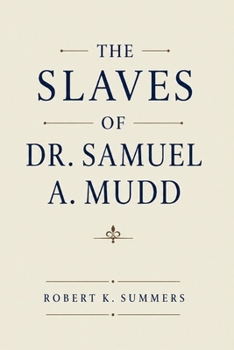
The Slaves of Dr. Samuel A. Mudd

The Slaves of Dr. Samuel A. Mudd
They lived and worked on Dr. Samuel A. Mudd's Maryland farm. Some escaped. Some remained after emancipation. And six of them left their own words in the record of the Lincoln assassination trial.
History remembers Dr. Samuel A. Mudd as the country physician who treated John Wilkes Booth's broken leg after the assassination of President Abraham Lincoln.
Far less is known about the men, women, and children who were enslaved on Mudd's tobacco farm.
Their names were Elzee Eglent, Mary Simms, Milo Simms, Lettie Hall, Louisa Christie, Rachel Spencer, Richard Washington, Melvina Washington, and Frank Washington. Between 1859 and 1864, these nine people became part of the labor force on the farm where Mudd lived with his wife and children in Charles County, Maryland.
The Slaves of Dr. Samuel A. Mudd tells their story.
The book places their lives within the larger history of slavery in Maryland and within generations of slaveholding in the Mudd family. It examines how enslaved people were inherited, transferred, hired out, separated from family members, and treated as valuable property in the tobacco economy of Southern Maryland.
Then came the Civil War.
As Union forces moved through Southern Maryland, slavery began to collapse. Enslaved people fled farms and plantations, sought protection behind Union lines, and joined the United States Colored Troops. In August 1863, forty enslaved people escaped together from farms belonging to Mudd family members and relatives. Among them were men associated with Dr. Mudd's own farm. Some later accused Mudd and others of planning to send enslaved laborers to Richmond to help construct Confederate defenses.
When John Wilkes Booth appeared at Mudd's house after Lincoln's assassination, the lives of the people who worked there became part of one of the most famous criminal investigations in American history.
Several formerly enslaved people testified at Mudd's 1865 conspiracy trial. Their testimony described life on the farm, Mudd's political sympathies, conversations they had heard, and events surrounding Booth's visit. This book reproduces their testimony from the official trial record, allowing them to speak in their own words.
The story does not end with emancipation.
Where surviving records permit, the book follows these men and women into freedom. Rachel Spencer found work away from the Mudd farm. Milo Simms appears in Washington city directories in a variety of occupations. Frank Washington, Lettie Hall, and Louisa Christie remained on the Mudd farm for years after slavery ended. Lettie later spent decades caring for the children of Mudd's son before moving to Pennsylvania, where she gave a newspaper interview late in life recalling the morning John Wilkes Booth was at the Mudd house.
Little was recorded about the individual lives of most Americans who endured slavery. This book gathers the fragments that survived and restores names, voices, families, choices, and lives to nine people too often left in the background of the Samuel Mudd story.
Customer Reviews
ThriftBooks ® and the ThriftBooks ® logo are registered trademarks of Thrift Books Global, LLC
