


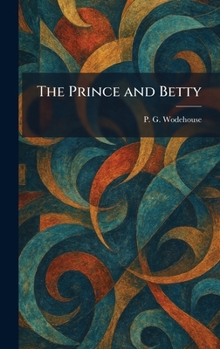
The Prince and Betty

"The Prince and Betty" is a charming and witty romantic comedy by the master of humor, P.G. Wodehouse. The story follows John Maude, a young man living a quiet life in New York who suddenly discovers he is the hereditary Prince of Mervo, a tiny Mediterranean island famous for its casino. However, the crown comes with strings attached: his stepfather, the unscrupulous Benjamin Scobell, intends to use John's royal status to boost the island's tourist trade through high-stakes gambling and sensationalism.
Complications arise when John encounters Betty Silver, a spirited young woman he had previously met and fallen for in France. As John struggles with his unwanted royal duties and Scobell's manipulative schemes, he must find a way to win Betty's heart while navigating the absurdities of life in a miniature principality. Filled with Wodehouse's signature wordplay, eccentric characters, and lighthearted social satire, "The Prince and Betty" is a delightful exploration of love, integrity, and the ridiculous nature of inherited power. This classic work showcases the early comedic brilliance that made Wodehouse one of the most beloved authors of the twentieth century.
This work has been selected by scholars as being culturally important, and is part of the knowledge base of civilization as we know it. This work was reproduced from the original artifact, and remains as true to the original work as possible. Therefore, you may see the original copyright references, library stamps (as most of these works have been housed in our most important libraries around the world), and other notations in the work.
This work is in the public domain in the United States of America, and possibly other nations. Within the United States, you may freely copy and distribute this work, as no entity (individual or corporate) has a copyright on the body of the work.
As a reproduction of a historical artifact, this work may contain missing or blurred pages, poor pictures, errant marks, etc. Scholars believe, and we concur, that this work is important enough to be preserved, reproduced, and made generally available to the public. We appreciate your support of the preservation process, and thank you for being an important part of keeping this knowledge alive and relevant.
Customer Reviews
ThriftBooks ® and the ThriftBooks ® logo are registered trademarks of Thrift Books Global, LLC
